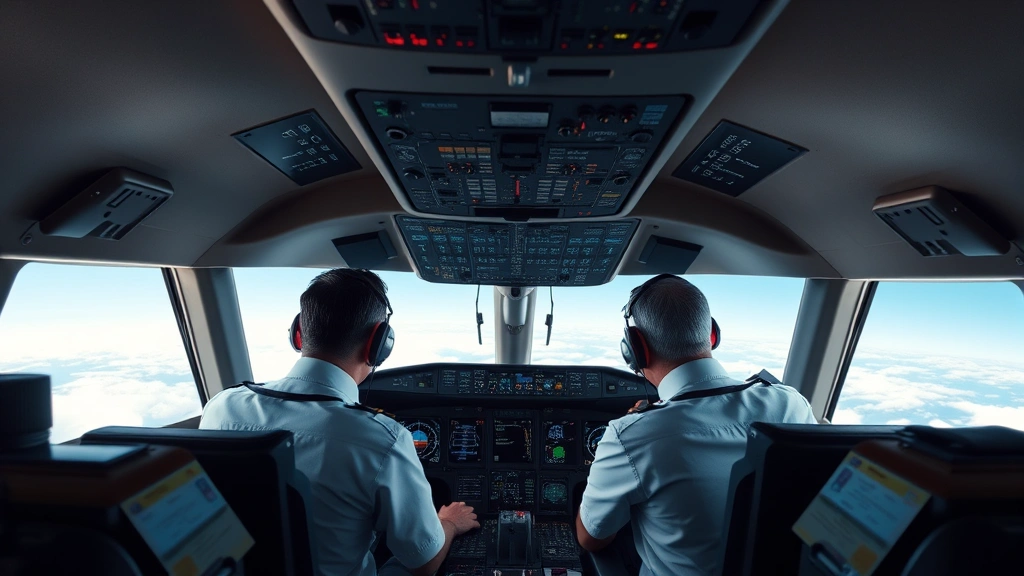
United Airlines Flight Turbulence: Pilot Insights and What You Need to Know
Turbulence remains one of the most anxiety-inducing aspects of air travel, yet it’s also one of the most misunderstood phenomena. When you’re aboard a United Airlines flight experiencing turbulence, understanding what’s happening from the cockpit perspective can transform fear into informed confidence. Commercial aviation has never been safer, and turbulence—while uncomfortable—is a manageable meteorological challenge that pilots train extensively to navigate.
Whether you’re flying a domestic route like Philadelphia to Pittsburgh flights or connecting through major hubs, turbulence can strike at any moment. This comprehensive guide pulls back the curtain on pilot training, aircraft capabilities, and the science behind turbulent air, offering travelers the reassurance that comes from understanding exactly what’s happening above the clouds.
What Causes Turbulence on United Airlines Flights
Turbulence occurs when aircraft encounter irregular air movement, which can be caused by several meteorological and geographic factors. The most common culprits include thermal updrafts from uneven ground heating, jet streams with sharp wind shear boundaries, and convective activity from thunderstorms. When flying routes like Dallas to New York flights, pilots frequently encounter clear-air turbulence (CAT) over certain geographic corridors where wind patterns create invisible waves of disturbed air.
United Airlines operates across diverse climate zones and terrain types, meaning their pilots encounter turbulence generated by mountain wave activity, especially when crossing the Rocky Mountains or Appalachian ranges. Near airports like Denver International or San Francisco, topography creates predictable turbulence patterns that experienced pilots anticipate and adjust for proactively.
Seasonal variations also play a significant role. Winter months bring stronger jet streams and more severe weather systems, while spring and fall present transitional atmospheric conditions that can spawn sudden turbulence. Understanding these patterns helps pilots like those operating Atlanta to New York flights make informed decisions about altitude selection and routing.
Pilot Training and Turbulence Management
United Airlines pilots undergo rigorous training that goes far beyond basic turbulence awareness. Every captain and first officer completes extensive initial training covering meteorology, aerodynamics, and turbulence-specific procedures. This training includes simulator sessions where pilots practice responding to severe turbulence scenarios, learning muscle memory for proper aircraft control and passenger communication.
Pilots receive continuous education throughout their careers through recurrent training, where they refresh their skills every six to twelve months depending on airline policy. This training covers:
- Meteorological interpretation: Reading radar displays, satellite imagery, and weather reports to identify turbulence-prone areas before encountering them
- Altitude optimization: Selecting cruising altitudes that avoid the worst turbulence while maintaining fuel efficiency
- Speed management: Adjusting airspeed to the aircraft’s turbulence-penetration speed, which minimizes structural stress and passenger discomfort
- Communication protocols: Coordinating with air traffic control and other aircraft to share real-time turbulence reports (PIREPs)
- Emergency procedures: Responding to extreme turbulence scenarios, including sudden severe conditions without warning
The turbulence-penetration speed is particularly important—it’s the airspeed at which an aircraft can encounter the most severe turbulence with minimal structural damage. For large aircraft like United’s Boeing 777 or Airbus A350, this speed provides a safety margin that protects both the aircraft and passengers from injury.
Aircraft Engineering and Safety Systems
Modern aircraft, including the fleet operated by United Airlines, are engineered with extraordinary margins of safety that make turbulence-related structural failure virtually impossible. The fuselage, wings, and tail surfaces undergo stress testing that simulates turbulence far more severe than anything encountered in nature.
Aircraft structures are designed with flexibility in mind. Wings don’t rigidly resist turbulent forces—they flex and move, absorbing energy rather than fighting against it. This dynamic response actually protects the aircraft and occupants far better than a rigid structure would. United’s Boeing 787 Dreamliner, for example, features composite wings that can flex dramatically without damage.
Advanced systems aboard United aircraft include:
- Weather radar: Forward-looking radar systems that detect precipitation and convective activity up to 300 nautical miles ahead
- Turbulence detection: Inertial reference systems that detect and record turbulence intensity, providing real-time feedback to pilots
- Terrain awareness and warning systems (TAWS): Ensuring safe altitude clearance during turbulent conditions
- Automatic pilot systems: Capable of maintaining stable flight through moderate turbulence while pilots make strategic decisions
- Structural health monitoring: Advanced sensors that track aircraft structural integrity throughout flight operations
These systems work in concert to ensure that United Airlines flight turbulence incidents remain uncomfortable experiences rather than dangerous ones. The redundancy built into modern aircraft means that no single system failure can compromise safety.
Types of Turbulence Explained
Not all turbulence is created equal. Understanding the different types helps passengers contextualize their experience and recognize when conditions are within normal operating parameters.
Clear-Air Turbulence (CAT): This occurs in cloudless skies where jet streams create invisible waves of disturbed air. CAT can strike without warning because pilots can’t see it on radar or through windows. However, it rarely causes structural damage—it’s primarily uncomfortable. United pilots request altitude changes from air traffic control to escape CAT, and these requests are usually granted quickly.
Convective Turbulence: Generated by thunderstorms and strong vertical air currents, this turbulence is visible on weather radar. Pilots actively avoid convective activity by routing around storm cells or requesting altitude changes to fly above or below the convective layer.
Mechanical Turbulence: Created when wind flows over terrain like mountains or buildings, mechanical turbulence is predictable and typically encountered during takeoff and landing phases. Airports in mountainous regions experience more mechanical turbulence, but pilots anticipate this and brief passengers accordingly.
Wake Turbulence: Generated by the wingtip vortices of larger aircraft, wake turbulence is managed through separation standards maintained by air traffic control. Smaller aircraft maintain minimum distances behind larger aircraft to avoid hazardous wake effects.
Practical Tips for Anxious Flyers
If you experience anxiety during turbulence on any flight, including United Airlines services, several evidence-based strategies can help:
- Seat selection: Seats over the wing experience less motion than seats at the front or rear of the aircraft. Request these seats when booking or checking in
- Breathing techniques: Deep, slow breathing activates your parasympathetic nervous system, counteracting the fight-or-flight response. Practice 4-7-8 breathing: inhale for four counts, hold for seven, exhale for eight
- Grounding exercises: The 5-4-3-2-1 technique helps refocus attention: identify five things you see, four you can touch, three you hear, two you smell, one you taste
- Education: Understanding turbulence reduces anxiety. Review pilot training materials and aircraft specifications before flying
- Conversation: Flight attendants welcome questions about turbulence. Their calm, matter-of-fact responses provide reassurance
- Progressive muscle relaxation: Systematically tense and release muscle groups to reduce physical tension
- Distraction: Engage with movies, music, or reading material to redirect attention away from aircraft movement
Modern Technology and Turbulence Prediction
The aviation industry continuously advances turbulence detection and prediction capabilities. United Airlines benefits from cutting-edge technology that helps pilots anticipate and avoid turbulence before encountering it.
Real-time turbulence reporting through pilot reports (PIREPs) creates a dynamic information network. When one pilot encounters turbulence, they radio air traffic control with specific details: location, altitude, turbulence intensity, and duration. This information is shared with other aircraft in the vicinity, allowing pilots to make informed routing decisions.
Satellite meteorology has revolutionized turbulence prediction. Modern weather satellites provide hourly updates on atmospheric conditions, helping meteorologists identify jet stream positions and convective potential hours in advance. United’s dispatch centers use this information to plan optimal flight paths before aircraft depart gates.
Machine learning algorithms are beginning to enhance turbulence forecasting by analyzing historical turbulence patterns, current meteorological data, and flight track information. These tools help identify areas of likely turbulence that might not be obvious from traditional meteorological analysis alone.
Real Incident Analysis
Examining real incidents involving turbulence provides valuable context. When severe turbulence occurs, it typically results in injuries to unbelted passengers or flight attendants rather than structural aircraft damage. The 2009 incident involving a Delta flight returns Atlanta engine issue involved different circumstances, but it illustrates how modern aircraft systems manage emergency situations.
United’s safety record demonstrates the effectiveness of current turbulence management protocols. Injuries from turbulence on United flights are rare, and serious injuries are extremely rare. The airline’s pilot training, aircraft maintenance standards, and operational procedures work together to create an exceptionally safe flying environment.
When incidents do occur, the aviation industry learns and improves. The National Transportation Safety Board (NTSB) investigates significant turbulence events, and findings are shared across the industry. This collaborative approach means that safety improvements benefit all airlines and passengers.
For travelers concerned about turbulence, it’s worth noting that driving to your destination is statistically far more dangerous than flying. The probability of experiencing a serious injury from turbulence on a commercial flight is extraordinarily low—far lower than traffic accident risk on highways.
FAQ
Can turbulence cause an airplane to crash?
No. Modern aircraft are designed to withstand turbulence far more severe than anything encountered in nature. Turbulence causes discomfort and occasional minor injuries, but it cannot structurally damage a modern airliner or cause a crash. Aircraft fuselages and wings are engineered with massive safety margins.
Why don’t pilots always avoid turbulence?
Pilots actively avoid severe turbulence when possible, but sometimes avoiding it would require significant detours that increase flight time and fuel consumption. For mild to moderate turbulence, the cost-benefit analysis favors proceeding through rather than diverting. Passengers should trust that pilots make these decisions based on safety and operational efficiency.
Is turbulence worse at certain times of year?
Yes. Winter months typically bring stronger jet streams and more severe weather systems, resulting in more frequent and intense turbulence. Spring and fall present transitional conditions that can also produce turbulence. Summer generally features calmer conditions, though thunderstorms can create convective turbulence.
Should I avoid flying during turbulent seasons?
While turbulence is more common in winter, flying remains extremely safe year-round. If turbulence anxiety is severe, discussing concerns with a mental health professional or your physician is recommended. Some travelers find that flying during typically calmer seasons (late spring through early fall) helps manage anxiety.
How do pilots communicate turbulence information?
Pilots use standardized terminology when reporting turbulence: light (causes slight, rhythmic bumpiness), moderate (causes changes in altitude or attitude; unsecured objects move), severe (abrupt, intense changes; standing passengers may fall), or extreme (aircraft temporarily out of control). These reports are transmitted to air traffic control and shared with other aircraft.
What should I do if I’m nervous about flying?
Consider taking a fear-of-flying course offered by many airlines, including United. These evidence-based programs combine education, simulator exposure, and psychological techniques. Speaking with flight crews about concerns, selecting seats over the wing, and practicing breathing techniques also help significantly.
Are newer aircraft smoother than older ones?
Newer aircraft like United’s Boeing 787 and Airbus A350 feature advanced materials and aerodynamic designs that can provide smoother flights in some conditions. However, turbulence is a meteorological phenomenon independent of aircraft type. All modern aircraft handle turbulence safely, though passenger comfort preferences may vary by aircraft model.
How can I prepare for a flight with expected turbulence?
Check weather forecasts for your route, arrive early to request seat preferences (over the wing), wear comfortable clothing, stay hydrated, and bring comfort items like noise-canceling headphones. Most importantly, remind yourself that turbulence, while uncomfortable, is completely normal and safe.
External Resources:


