
UA Flight Attendant Salary: Insider Insights into Compensation and Career Growth
Working as a United Airlines flight attendant represents one of the most dynamic careers in aviation, combining travel opportunities with competitive compensation packages. Whether you’re considering joining United’s cabin crew or curious about how flight attendant earnings compare across the industry, understanding the salary structure, benefits, and growth potential is essential. This comprehensive guide breaks down everything you need to know about UA flight attendant salary, from base pay to premium earnings and long-term career advancement.
United Airlines, one of the “Big Three” carriers in the United States, employs thousands of flight attendants across domestic and international routes. The compensation package extends far beyond the base hourly wage, encompassing per diem allowances, health benefits, retirement plans, and unique travel perks that make the role financially attractive for career-minded professionals.
UA Flight Attendant Base Salary Structure
United Airlines flight attendants start their careers with a competitive base salary that has increased significantly in recent years due to industry-wide demand and union negotiations. As of 2024, new hire flight attendants at United typically earn between $28,000 and $32,000 annually based on their initial contract, though this figure represents only a portion of total compensation.
The hourly rate for new flight attendants at United starts at approximately $16.50 to $18.50 per hour for flight time, with guaranteed minimum monthly earnings. However, the actual compensation structure is more nuanced than simple hourly rates. United uses a “flight hour” system where attendants are paid only for time spent in the air, not for ground time, pre-flight preparations, or post-flight duties. This distinction significantly impacts how flight attendants calculate their true hourly earnings.
The base salary structure includes several tiers. New hires begin at the lowest pay scale, with automatic increases occurring at regular intervals (typically every six months to one year) during the first few years of employment. By the end of the first year, many United flight attendants see their base compensation increase to around $35,000 to $40,000 when combining all pay components. Understanding the best airlines for long flights often involves evaluating crew compensation structures, as these directly impact service quality and crew morale.
United’s contract specifies minimum monthly guarantees, meaning flight attendants receive payment for a baseline number of flight hours each month, even if they work fewer hours. This guarantee typically ranges from 65 to 75 flight hours monthly for junior flight attendants, providing income stability even during slower travel periods.
Per Diem and Trip Pay Breakdown
One of the most significant components of UA flight attendant salary comes from per diem allowances. Per diem represents daily compensation for time spent away from the base airport and covers meal and incidental expenses during layovers. United flight attendants receive $2.15 to $2.50 per hour in per diem pay for all hours away from their home base, calculated from the moment they leave the base airport until they return.
For a typical four-day trip with layovers in multiple cities, per diem can add $150 to $300 to a flight attendant’s paycheck. This amount is in addition to flight time pay and represents pure compensation, not a reimbursement. Over a year, per diem accumulates significantly; a flight attendant working consistent international trips can earn an additional $8,000 to $12,000 annually from per diem alone.
Trip pay structures at United vary based on trip type and length. Domestic trips typically pay flight time plus per diem, while international trips include additional premiums. The airline also offers “report pay” or “show-up pay,” which compensates flight attendants for reporting to work even if the flight is cancelled or significantly delayed. This typically covers two to four hours of pay and represents another hidden income component many aspiring flight attendants don’t initially consider.
United also provides “overtime” opportunities, though flight attendants don’t receive traditional overtime multipliers. Instead, once they exceed their monthly guarantee hours, they continue earning their standard flight hour rate. However, senior flight attendants can pick up additional trips beyond their scheduled monthly assignments, significantly boosting their annual earnings. When exploring flights to Miami from Atlanta, considering crew scheduling patterns helps understand how flight attendants optimize their route selections for maximum earnings.
Premium Pay and International Routes
International flight assignments represent a significant earnings opportunity for United flight attendants. The airline operates extensive international networks spanning Europe, Asia, Latin America, and the Pacific, with flights requiring larger cabin crews and generating premium compensation.
International flights pay higher flight hour rates than domestic routes, typically ranging from $19 to $22 per flight hour for experienced attendants, compared to $16 to $18 for domestic flights. A 12-hour transatlantic flight generates substantially more income than domestic regional routes. Additionally, international trips include longer layovers in major global cities, resulting in increased per diem earnings.
Premium pay also applies to specific route assignments. Flights departing from or arriving at major international hubs like London, Tokyo, Paris, and Rio de Janeiro command higher compensation. United also offers premium pay for flights to certain challenging destinations, high-altitude routes, and assignments requiring specific language skills. Flight attendants fluent in languages such as Spanish, Mandarin, Japanese, or Arabic can earn additional bonuses ranging from $50 to $150 monthly.
The scheduling system at United allows senior flight attendants to bid for preferred international routes, creating a competitive market where the most experienced and senior attendants secure the highest-paying assignments. This creates a clear pathway for income growth as flight attendants accumulate seniority. Comparing route options, similar to researching San Diego to New York flights, helps attendants understand which assignments offer optimal compensation-to-effort ratios.
Benefits Package and Hidden Compensation
The true value of a United flight attendant position extends far beyond salary figures. The comprehensive benefits package represents an estimated 25-35% additional compensation value beyond base pay.
Health insurance at United is notably generous, with the airline covering 80-90% of premium costs for individual and family plans. Dental and vision coverage are included at no additional cost to employees. The airline also provides life insurance, disability coverage, and access to employee wellness programs worth thousands of dollars annually.
Retirement benefits represent perhaps the most valuable long-term compensation component. United flight attendants participate in a defined-benefit pension plan, one of the last major airlines maintaining such programs. Employees with 20+ years of service can retire with pension benefits replacing 40-50% of their final average salary. Additionally, the airline offers a 401(k) plan with matching contributions up to 8% of salary, effectively providing an additional $2,000-$3,200 annually for maximizing contributions.
Travel benefits constitute another substantial hidden compensation element. United flight attendants receive free or heavily discounted passes for themselves and family members on United flights, with space-available seating on other carriers through airline partnerships. Over a career, this benefit easily saves flight attendants tens of thousands of dollars in travel expenses. Spouses and dependent children receive reduced-rate passes, making family travel extraordinarily affordable.
The airline also offers tuition reimbursement programs, professional development opportunities, and access to employee discount networks covering hotels, car rentals, and entertainment. When combined with the career-long value of free travel and pension contributions, total compensation for experienced United flight attendants often exceeds $70,000-$85,000 annually when calculating all components.
Seniority Impact on Earnings
Seniority fundamentally shapes UA flight attendant salary progression. The airline operates a strict seniority system where flight attendants with more years of service receive priority for route selection, scheduling preferences, and premium assignments. This system directly translates to income differences between junior and senior attendants.
A newly hired flight attendant might earn $35,000-$40,000 annually including all compensation components. By year three, with seniority-based pay increases and ability to bid for better trips, earnings typically reach $45,000-$55,000. By year ten, experienced flight attendants routinely earn $60,000-$75,000 annually, and senior attendants with 15+ years can exceed $85,000, particularly those working premium international routes.
The seniority system also determines scheduling flexibility. Senior flight attendants can request specific days off, bid for preferred routes, and avoid undesirable trip assignments. This flexibility allows experienced attendants to optimize their schedules, combining high-paying international trips with adequate rest and personal time—something junior attendants cannot do.
Seniority also impacts base assignments. Flight attendants can transfer between United’s major bases (Chicago, Houston, Los Angeles, New York, San Francisco, Denver) once they achieve sufficient seniority. Basing at major international hubs typically offers more premium international flight opportunities, directly impacting earning potential. Understanding Dallas to Denver flights and major hub operations helps flight attendants strategize base selections for maximum earning potential.
Career Progression and Salary Growth
United Airlines offers several career advancement pathways beyond standard flight attendant positions. Purser roles represent the first leadership opportunity, with pursers overseeing cabin operations on larger aircraft and earning $2-$4 per flight hour premiums above standard attendant rates. Training purser and international purser positions offer additional compensation for mentoring and specialized responsibilities.
Lead flight attendant positions on premium cabin aircraft (Business and First Class) command higher hourly rates and per diem, often earning $3-$5 more per flight hour than economy cabin attendants. These premium cabin roles require additional training but provide significant income increases.
Some flight attendants transition into ground positions within United, such as crew scheduling, training, or customer service management. These roles typically offer salary increases and more traditional work schedules, though they sacrifice the travel benefits and flexibility of flight-based positions.
Union leadership roles provide another advancement path. Flight attendants elected to union positions (grievance representatives, contract negotiators, training coordinators) receive compensation adjustments and often transition into full-time union roles with competitive salaries.
Supervisory and management positions exist within the flight attendant ranks, though these typically require leaving the union contract and accepting different compensation structures. Most experienced flight attendants remain in union positions, as the benefits and pension advantages are difficult to replicate in management roles.
Comparison with Other Major Airlines
How does United’s flight attendant compensation compare to industry competitors? The “Big Three” carriers—United, American, and Delta—maintain relatively comparable salary structures, though differences exist in per diem rates, international pay premiums, and benefits packages.
Delta flight attendants typically earn similar base salaries to United but offer slightly higher per diem rates ($2.25-$2.65 per hour). American Airlines flight attendants earn comparable wages but have less generous pension benefits following their bankruptcy restructuring. Southwest Airlines, known for higher employee compensation, pays flight attendants more per flight hour ($18-$20+ for experienced attendants) but operates a different scheduling model without international routes.
Smaller carriers and budget airlines offer lower compensation but sometimes provide faster advancement and different lifestyle benefits. Regional carriers pay substantially less, with starting salaries often in the $24,000-$28,000 range. However, United’s benefits package, particularly the pension plan and travel benefits, often exceeds what competitors offer in total value.
When evaluating career opportunities, flight attendants should consider total compensation including benefits, scheduling flexibility, international opportunities, and long-term retirement security rather than base salary alone. United consistently ranks among the top airline employers for total compensation value.
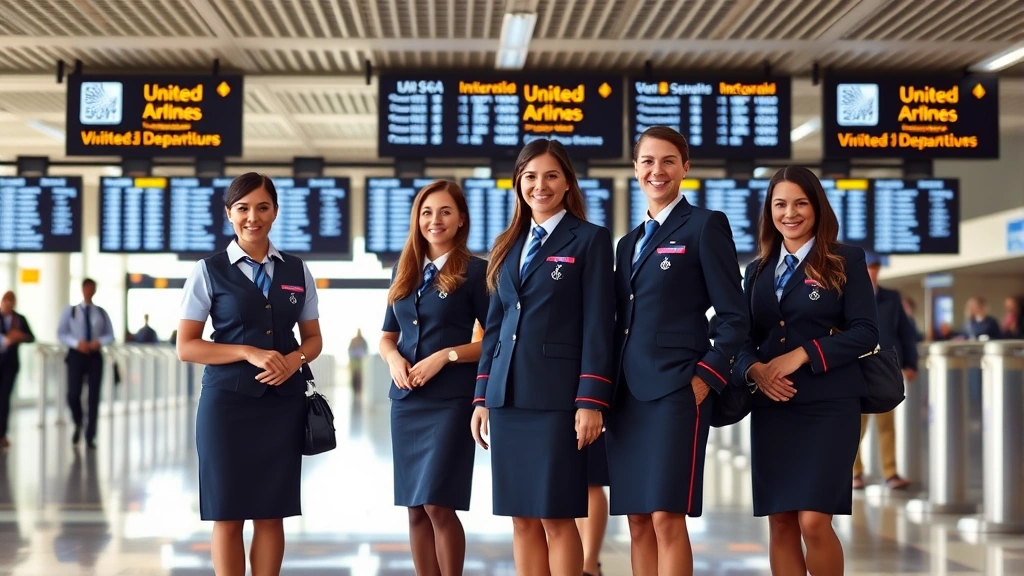
The career trajectory at United offers legitimate income growth potential. A flight attendant who begins at $28,000 annually can realistically reach $70,000+ within 10-15 years while accumulating significant pension benefits, travel perks, and healthcare coverage. This progression makes the role attractive for individuals seeking stable, long-term careers with genuine advancement opportunities.
FAQ
What is the starting salary for a United Airlines flight attendant?
United flight attendants start at approximately $16.50-$18.50 per flight hour, translating to $28,000-$32,000 annually based on minimum monthly guarantees. When including per diem and other compensation, first-year earnings typically reach $35,000-$40,000.
How much can experienced flight attendants earn at United?
Experienced United flight attendants with 10+ years of seniority working premium international routes earn $75,000-$85,000+ annually. This includes base salary, per diem, international premiums, and scheduling benefits.
Does United offer per diem pay?
Yes, United flight attendants receive $2.15-$2.50 per hour in per diem for all hours away from their home base. This can add $8,000-$12,000 annually depending on trip assignments.
What benefits do United flight attendants receive?
Benefits include comprehensive health insurance, dental and vision coverage, defined-benefit pension plans, 401(k) matching, free travel privileges, tuition reimbursement, and employee discounts. These benefits represent 25-35% additional compensation value.
Can flight attendants earn overtime at United?
United flight attendants don’t receive traditional overtime multipliers. Instead, they continue earning standard flight hour rates beyond their monthly guarantee. Senior attendants can pick up additional trips for extra income.
How does seniority affect flight attendant salary?
Seniority determines pay increases, route selection, scheduling preferences, and base assignments. Senior flight attendants earn significantly more by securing premium international routes and favorable schedules.
Do language skills increase flight attendant pay?
Yes, United offers language bonuses ranging from $50-$150 monthly for fluency in high-demand languages like Spanish, Mandarin, Japanese, and Arabic.
What is the pension benefit for United flight attendants?
United maintains a defined-benefit pension plan where attendants with 20+ years of service can retire with pensions replacing 40-50% of final average salary, one of the industry’s most generous retirement programs.
How do international flights affect earnings?
International flights pay $19-$22 per flight hour compared to $16-$18 for domestic flights. Longer layovers increase per diem earnings, making international assignments substantially more lucrative.
Is flight attendant work unionized at United?
Yes, United flight attendants are represented by the Association of Flight Attendants-CWA (AFA-CWA), which negotiates contracts, ensures job protections, and advocates for improved compensation and working conditions. When considering employment opportunities, exploring positions like flight dispatcher jobs provides perspective on other aviation career paths with different compensation structures.


