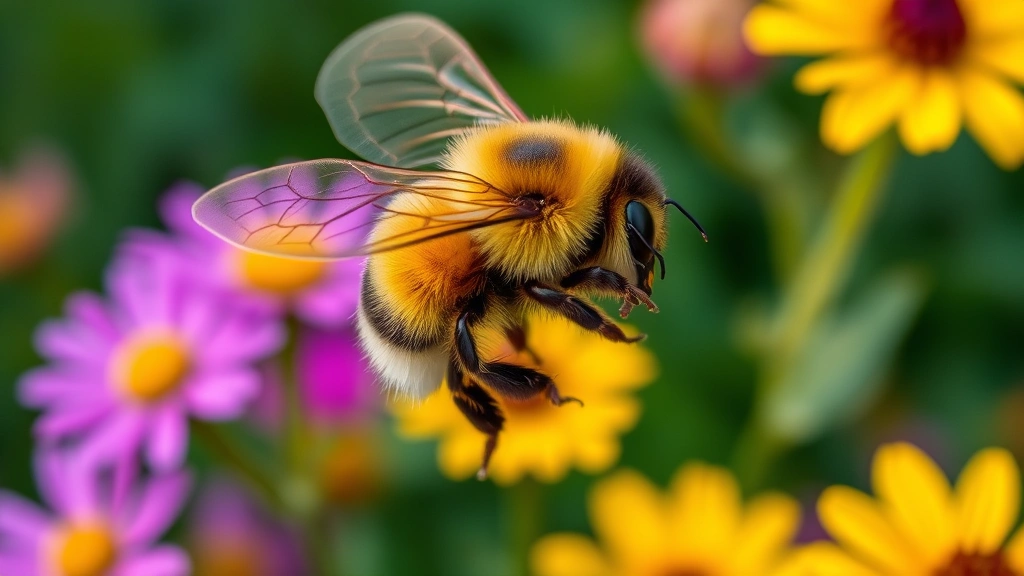
Bumblebee Flight: Nature’s Marvel Explained
When you think of aviation marvels, your mind might drift toward sleek aircraft soaring across continents—perhaps a flight from Atlanta to New York or exotic journeys to St Maarten. Yet one of nature’s most extraordinary flying achievements happens on a much smaller scale, right in gardens and meadows around the world. The bumblebee flight represents a biological engineering feat that has captivated scientists, engineers, and nature enthusiasts for over a century. These fuzzy, rotund insects defy conventional aerodynamic logic, hovering and maneuvering through the air with a grace that seems physically impossible given their body proportions. Understanding how bumblebees achieve flight reveals not only the sophistication of nature’s design but also offers inspiration for human innovation in aviation technology.
The mystery of bumblebee flight has transcended casual observation to become a serious scientific pursuit. For decades, aerodynamicists claimed that bumblebees shouldn’t be able to fly based on traditional aerodynamic principles—their wings appeared too small relative to their heavy bodies, and their wing-beat frequency seemed insufficient to generate the necessary lift. This paradox captured public imagination and inspired researchers worldwide to unlock the secrets of these remarkable insects. Today, we understand that bumblebees employ sophisticated flight mechanisms that go far beyond what textbook aerodynamics would predict, combining rapid wing movement, complex wing kinematics, and dynamic air manipulation to achieve stable, efficient flight.
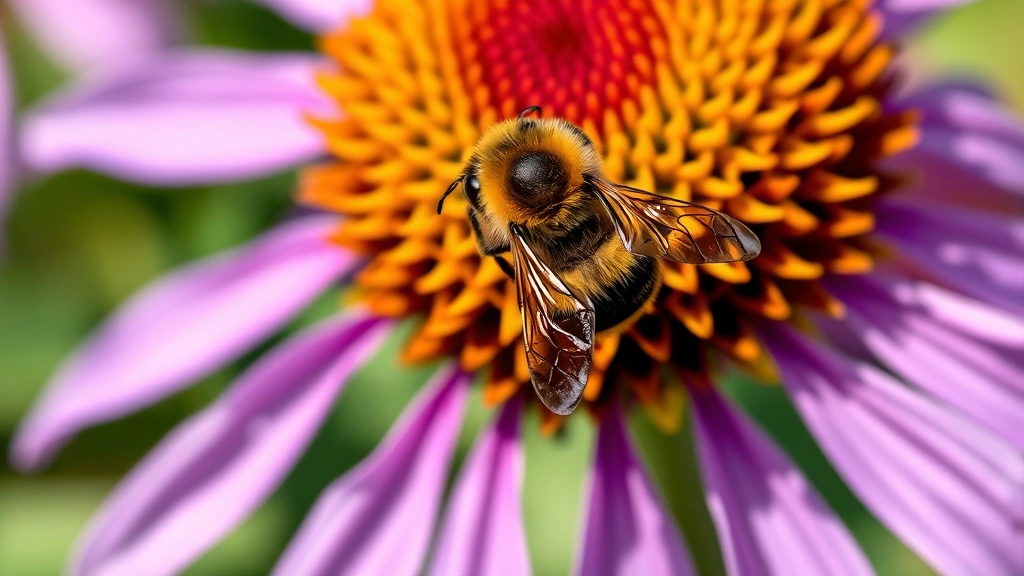
The Physics of Bumblebee Flight
The bumblebee flight phenomenon emerged as one of aviation’s greatest unsolved mysteries during the mid-20th century. The famous myth claims that Swiss entomologist Auguste Magnan declared in 1934 that bumblebees were aerodynamically incapable of flight, supposedly based on calculations by his assistant André Sainte-Laguë. While this attribution has been disputed by modern historians, the underlying question remained genuine: how could these insects possibly fly? Traditional aerodynamic models, developed for rigid aircraft wings moving through air at relatively steady speeds, simply couldn’t explain the bumblebee’s performance.
The key to understanding bumblebee flight lies in recognizing that these insects operate in a completely different aerodynamic regime than fixed-wing aircraft. Where airplanes rely on steady-state lift generated by airfoil shapes moving continuously through air, bumblebees generate lift through rapid, complex wing movements that create dynamic pressure changes. Their wings beat at frequencies between 130 and 240 times per second—far faster than human perception can follow. This rapid beating generates vortices and pressure differentials that conventional steady-flow aerodynamic theory simply doesn’t address. The bumblebee essentially reinvents its aerodynamic situation with every wing beat, exploiting transient phenomena that would be irrelevant to larger, slower-moving aircraft.
When exploring top travel destinations 2025, adventurous naturalists often seek locations where they can observe bumblebees in their native habitats. The physics governing their flight remains consistent whether they’re pollinating alpine flowers or visiting backyard gardens. Researchers have discovered that bumblebees generate approximately 1.5 times their body weight in lift during normal flight, with the capacity to generate up to twice their body weight when accelerating or maneuvering. This impressive performance comes from the precise coordination of multiple muscle groups and neural systems working in remarkable synchronization.
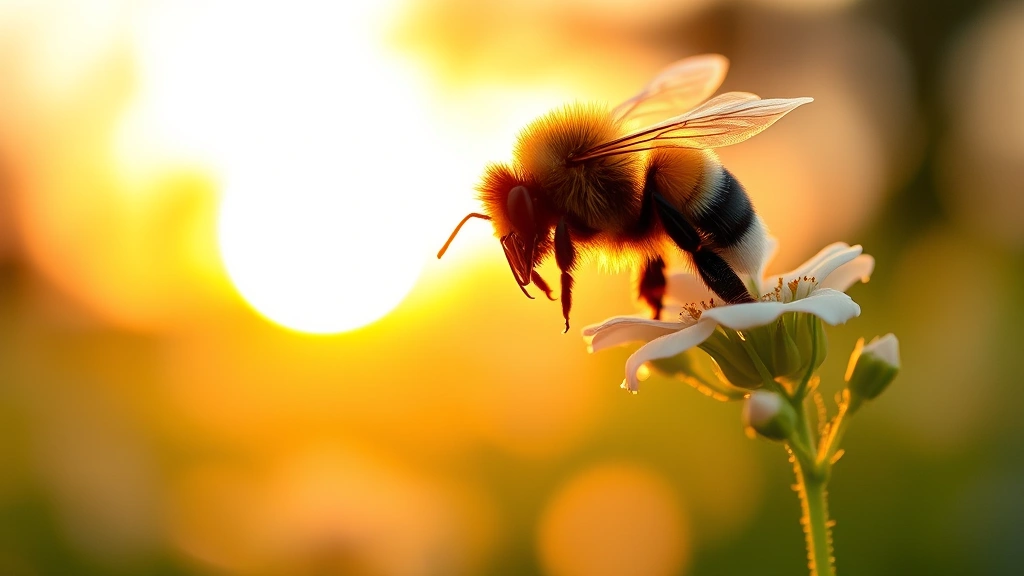
Wing Structure and Mechanics
The anatomical design of bumblebee wings reveals millions of years of evolutionary optimization. Unlike the rigid, flat wings of many insects, bumblebee wings possess remarkable flexibility and complexity. Each wing contains a network of veins that provide structural support while allowing controlled deformation. The wings aren’t simple paddles; they’re sophisticated structures capable of subtle shape changes that dramatically affect airflow patterns. During different phases of the wing beat cycle, the wing curvature, angle of attack, and rotational velocity all change in precise, coordinated ways.
Bumblebee wings operate through a combination of direct and indirect flight muscles. Direct muscles attach wing bases directly to the thorax and control fine adjustments in wing position and angle. Indirect muscles, which are much larger, deform the thorax itself, causing the wings to flap as a consequence of the body’s shape changes. This indirect system is remarkably efficient, allowing sustained flight with minimal energy expenditure compared to direct muscle systems. The thorax of a bumblebee essentially acts as a sophisticated biomechanical oscillator, with the wing beats emerging naturally from the elastic properties of the thoracic exoskeleton combined with precisely timed muscle contractions.
The wing beat pattern isn’t a simple up-and-down motion. Instead, bumblebee wings follow a figure-eight trajectory in three-dimensional space, with complex rotations occurring at the end of each stroke. This rotation, called supination and pronation, changes the wing’s angle of attack and generates additional vortices that enhance lift generation. The trailing edge of the wing creates a distinctive wake pattern in the air, and bumblebees appear to actively control this wake to maximize efficiency. High-speed video analysis has revealed that bumblebees adjust their wing kinematics in real-time based on air currents and flight demands, demonstrating remarkable neural control over these complex movements.
The Aerodynamic Advantage
Modern computational fluid dynamics (CFD) studies have illuminated the aerodynamic mechanisms that make bumblebee flight possible. The primary advantage lies in the generation of leading-edge vortices—spiral patterns of air that form along the upper surface of the wing during each stroke. These vortices create regions of low pressure that generate substantial lift, far exceeding what steady-state aerodynamic theory would predict. The vortex remains attached to the wing throughout most of the stroke, only shedding when the wing reverses direction. This mechanism is so efficient that it has inspired biomimetic designs in robotics and micro-aerial vehicle research.
The hovering capability of bumblebees represents perhaps their most impressive aerodynamic achievement. Hovering requires that the insect generate exactly enough lift to counteract gravity while maintaining zero forward motion—a feat that demands exquisite control and efficiency. During hovering, bumblebees employ an asymmetrical wing beat pattern, with the downstroke generating most of the lift while the upstroke also contributes significantly more than would be expected. The wing rotation at stroke reversal is crucial, allowing the wing to generate lift in both directions. This two-way lift generation is fundamentally different from many other flying insects and represents a significant evolutionary innovation.
Bumblebees also demonstrate remarkable agility, capable of rapid acceleration, deceleration, and directional changes. They can fly backwards, sideways, and even perform inverted maneuvers. This extraordinary maneuverability stems from their ability to independently control the amplitude and frequency of each wing’s beat, allowing asymmetrical wing movements that generate torque for rotation. When pursuing mates or evading predators, bumblebees can achieve instantaneous turns that would seem impossible given their body inertia. This control is achieved through rapid neural processing and millisecond-scale adjustments to wing kinematics, demonstrating the sophistication of the insect nervous system.
Hovering Capabilities and Precision
The ability to hover is essential for a flower-feeding insect, allowing bumblebees to access nectar and pollen while remaining stationary in space. This capability demands extraordinary precision in wing control and neural processing. Bumblebees must continuously monitor their position, velocity, and orientation while adjusting wing movements to maintain equilibrium against gravitational and aerodynamic forces. The sensory systems involved include compound eyes providing visual feedback, ocelli detecting light intensity changes, and mechanoreceptors sensing wing and body movements. This sensory information flows into the insect’s brain at remarkable rates, enabling real-time adjustments to flight parameters.
The energy cost of hovering is substantial—far higher than forward flight due to the inefficiency of generating lift without the aerodynamic benefits of airflow over the fuselage. Bumblebees compensate for this high metabolic demand through their diet of nectar, which provides rapid energy availability. A bumblebee visiting a flower must consume nectar at a rate that compensates for the energy burned during hovering, creating a complex optimization problem that the insect solves through behavioral learning and adaptation. Bumblebees remember which flowers provide the best nectar rewards and adjust their hovering duration accordingly, demonstrating cognitive abilities that extend beyond simple reflex responses.
Precision hovering near flowers requires sensitivity to subtle environmental cues. Wind speed and direction must be continuously assessed and compensated for, as even gentle breezes can displace the insect from its intended position. Bumblebees appear to use visual flow—the pattern of movement of visual features across their compound eyes—to estimate their velocity and position relative to environmental features. This visual feedback system is remarkably sensitive, allowing bumblebees to maintain stable hovering even in gusty conditions. The neural processing required for this sensory integration and motor control happens at speeds that rival or exceed the capabilities of modern computational systems.
Muscle Power and Energy Efficiency
The thoracic muscles of bumblebees are among the most powerful muscles in the animal kingdom, relative to body mass. These muscles must contract and relax dozens of times per second, generating the forces necessary to accelerate the wings and overcome air resistance. The muscle fibers are packed with mitochondria, the cellular organelles responsible for aerobic energy production, allowing them to sustain intense activity for extended periods. The metabolic rate of flying bumblebees is extraordinarily high—among the highest of any animal—yet remarkably efficient given the mechanical work being performed.
Bumblebees employ a sophisticated thermoregulation system to maintain optimal muscle performance. Flight muscles generate substantial heat, and bumblebees use this thermogenesis strategically. Before taking flight, bumblebees often engage in a warm-up period where they contract their muscles without moving their wings, generating heat that elevates thoracic temperature to optimal levels for muscle function. This warm-up behavior is essential in cool environments and explains why bumblebees are active in conditions where other insects cannot fly. The ability to maintain elevated body temperatures through internal heat generation is a characteristic of bumblebees and some other flying insects, distinguishing them from ectothermic animals that rely entirely on environmental heat.
The energy efficiency of bumblebee flight improves with body size—larger bumblebees actually fly more efficiently than smaller species, contrary to what might be expected. This scaling relationship relates to the physics of wing beat frequency and Reynolds number, the dimensionless quantity that characterizes the relative importance of inertial and viscous forces in fluid flow. Smaller insects operate at lower Reynolds numbers where viscous forces dominate, requiring more energy to generate lift. This scaling relationship has important implications for understanding how insect flight evolved and how body size constraints limit flight performance across different species.
Comparison to Other Flying Insects
While bumblebees are remarkable fliers, they represent just one evolutionary solution to the problem of insect flight. Dragonflies, with their four independent wings and extreme maneuverability, employ a fundamentally different aerodynamic strategy. Dragonflies generate lift through a combination of leading-edge vortices and steady-state aerodynamic forces, achieving even more spectacular aerial performance than bumblebees. However, dragonflies cannot hover effectively and require forward motion to generate lift, limiting their ability to feed on stationary flowers. Butterflies, conversely, rely more heavily on steady-state aerodynamic principles combined with flapping wing motions, achieving efficient forward flight but with less impressive hovering capabilities.
Honeybees, the closest relatives of bumblebees, employ similar aerodynamic principles but with some important differences. Honeybees are generally smaller and lighter than bumblebees, affecting their wing beat frequencies and aerodynamic efficiency. Honeybees also exhibit specialized behaviors like the waggle dance for communicating flower locations, suggesting different evolutionary pressures shaped their flight capabilities. Mosquitoes and other small insects operate at even lower Reynolds numbers where viscous forces dominate, requiring completely different flight strategies involving higher wing beat frequencies and different wing morphologies. The diversity of flying insect designs reflects millions of years of evolutionary optimization for different ecological niches and environmental conditions.
For those interested in observing diverse insect species in their natural habitats, planning best road trips in USA through wildflower regions offers excellent opportunities. Natural areas with diverse flowering plants support varied insect populations, allowing observation of different flight strategies and behaviors. Similarly, how to travel on a budget guides often include suggestions for visiting public gardens and nature preserves where bumblebees and other insects can be observed without expensive guided tours.
Applications in Modern Technology
The remarkable flight capabilities of bumblebees have inspired substantial research in biomimetic engineering, with the goal of creating artificial flying robots that match or exceed insect performance. Researchers at institutions worldwide have developed micro-aerial vehicles (MAVs) based on insect-flight principles. These tiny robots, some no larger than actual insects, employ flapping wings, advanced sensors, and sophisticated control algorithms to achieve insect-like flight. The applications extend far beyond academic curiosity—micro-aerial vehicles have potential uses in surveillance, environmental monitoring, search and rescue operations, and scientific research in environments where larger aircraft cannot operate.
The aerodynamic principles discovered through bumblebee flight research have influenced aircraft design in subtle but important ways. While commercial aircraft still rely primarily on fixed-wing designs, understanding leading-edge vortex generation and dynamic stall phenomena has improved aircraft efficiency and performance. Military aircraft designers have incorporated biomimetic principles to enhance maneuverability and efficiency. Wind turbine blade design has also benefited from research on insect wings, with curved blade designs inspired by natural wing structures improving energy capture efficiency.
Computational fluid dynamics simulations based on bumblebee wing kinematics have revealed principles of efficient flapping flight that extend beyond insects. These insights have applications in understanding how other animals fly—from hummingbirds to pterosaurs—and provide guidance for designing artificial systems. The neural control strategies employed by bumblebees, involving rapid sensory feedback and real-time motor adjustments, have inspired developments in robotics and artificial intelligence. Algorithms that mimic the decision-making processes of insect brains have proven effective in autonomous vehicle control, navigation systems, and adaptive robotics applications.
Research into bumblebee flight has also contributed to our understanding of insect decline and conservation. As bumblebee populations face threats from habitat loss, pesticides, and climate change, understanding their flight physiology helps identify environmental stressors and develop conservation strategies. The energy demands of flight mean that bumblebees require consistent access to high-quality food sources, making floral habitat quality a critical conservation concern. Scientists studying bumblebee flight have contributed to broader efforts to protect these essential pollinators, recognizing that their remarkable aerodynamic capabilities are meaningless without healthy ecosystems to support them.
FAQ
Why was bumblebee flight considered impossible?
Early aerodynamicists applied steady-state aerodynamic principles developed for fixed-wing aircraft to bumblebees, concluding their small wings couldn’t generate sufficient lift. This analysis ignored the dynamic, transient aerodynamic phenomena that bumblebees actually exploit, particularly leading-edge vortex generation during rapid wing movements. Modern understanding reveals that bumblebees operate in a completely different aerodynamic regime where unsteady phenomena dominate.
How fast do bumblebee wings beat?
Bumblebee wings beat between 130 and 240 times per second, depending on species size and flight mode. This rapid frequency generates the dynamic pressure changes and vortices necessary for lift generation. The exact frequency varies with air temperature, body size, and flight demands, allowing bumblebees to adjust their wing beat rate for different situations.
Can bumblebees fly backwards?
Yes, bumblebees can fly backwards, sideways, and perform inverted maneuvers. This extraordinary agility results from their ability to independently control each wing’s movement, generating asymmetrical forces that produce torque for rotation. This capability is essential for their ecological role as flower visitors, allowing them to approach flowers from any angle and escape from threats.
How much lift can a bumblebee generate?
Bumblebees generate approximately 1.5 times their body weight in lift during normal flight, with the capacity to generate up to twice their body weight during acceleration or evasive maneuvers. This impressive lift-to-weight ratio enables their remarkable flight performance and maneuverability.
What is a leading-edge vortex?
A leading-edge vortex is a spiral pattern of air that forms along the upper surface of the wing during flight. This vortex creates regions of low pressure that generate substantial lift. In bumblebees, the leading-edge vortex remains attached to the wing during the stroke, providing continuous lift enhancement throughout the wing beat cycle.
How do bumblebees generate lift during the upstroke?
Bumblebees rotate their wings at the end of each stroke, changing their angle of attack so that the upstroke also generates significant lift. This two-way lift generation is more efficient than insects that generate lift primarily during the downstroke, allowing bumblebees to maintain stable hovering flight.
What role does body temperature play in bumblebee flight?
Bumblebees maintain elevated thoracic temperatures through internal heat generation, optimizing muscle function for sustained flight. They engage in warm-up behaviors before flying, contracting flight muscles to generate heat. This thermoregulation allows bumblebees to remain active in cool environments where other insects cannot fly, providing competitive advantages for flower visitation.