What Happens During Flight Emergency? Pilot Insights
When turbulence strikes or warning lights illuminate the cockpit, passengers often wonder what’s happening behind that locked cabin door. Flight emergencies range from minor technical hiccups to serious situations requiring immediate action. Understanding the protocols, decision-making processes, and crew training that govern these critical moments can transform anxiety into informed confidence. Modern aviation has built extraordinary safety systems through decades of incident analysis, pilot expertise, and technological advancement.
Whether you’re a nervous flyer seeking reassurance or an aviation enthusiast curious about cockpit operations, this comprehensive guide reveals the insider perspective of experienced pilots navigating crisis situations. We’ll explore the systematic approaches, communication protocols, and split-second decisions that keep passengers safe when things go wrong at 35,000 feet.
How Emergencies Are Classified
Aviation authorities classify emergencies into distinct categories that determine response severity and resource allocation. The Federal Aviation Administration (FAA) and international aviation bodies recognize several classifications that guide pilot decision-making and ground response protocols.
Alert Phase represents the lowest emergency level, where an aircraft experiences a technical issue but poses no immediate threat. Examples include minor instrument malfunctions, communication difficulties, or fuel consumption concerns that exceed normal parameters. Pilots declare an alert to air traffic control, enabling ground support preparation without triggering full emergency protocols.
Uncertainty Phase occurs when pilots cannot determine their precise location or aircraft status. Navigation system failures, communication breakdowns with ground control, or instrument discrepancies trigger this classification. While serious, uncertainty phases don’t necessarily indicate immediate danger—they reflect incomplete information rather than confirmed threats.
Distress Phase represents genuine emergency status where the aircraft faces serious danger. Engine failures, hydraulic system malfunctions, medical emergencies, structural damage, or fuel emergencies fall into this category. A distress declaration activates maximum ground response, including emergency services positioning, airport clearance, and potential evacuation preparation.
Each classification determines which ground resources mobilize, how quickly they respond, and what communication frequencies activate. Pilots must accurately assess their situation to declare appropriate emergency levels—overreacting wastes resources, while underreacting delays critical assistance.
Pilot Training and Preparation
Commercial pilots undergo extensive training that emphasizes emergency response far beyond normal flight operations. Before earning their licenses, pilots complete hundreds of hours in simulators specifically designed to replicate emergency scenarios with photorealistic accuracy.
Initial Emergency Training begins during pilot certification programs. Aspiring pilots practice engine failures during takeoff, hydraulic system malfunctions, fire emergencies, and severe weather encounters. Instructors intentionally create stressful situations to build muscle memory and decision-making confidence under pressure. Pilots learn to prioritize tasks, delegate responsibilities, and maintain clear thinking when multiple systems fail simultaneously.
Recurrent Training Requirements mandate that commercial pilots refresh emergency procedures annually or biannually depending on their airline. These recurring sessions ensure pilots maintain proficiency with updated procedures, new aircraft systems, and lessons learned from recent incidents worldwide. Airlines invest millions in simulator time, recognizing that emergency preparedness directly impacts passenger safety.
Type-Specific Training focuses on particular aircraft models. A Boeing 787 pilot’s emergency procedures differ substantially from an Airbus A380 pilot’s protocols. Pilots must master the specific systems, failure modes, and recovery procedures unique to their aircraft type. This specialized knowledge enables rapid, accurate responses when emergencies occur.
Beyond formal training, experienced pilots develop intuitive understanding through thousands of flight hours. They recognize subtle instrument indications that signal developing problems, enabling early intervention before situations become critical. This combination of rigorous training and accumulated experience creates the foundation for effective emergency management.
Cockpit Procedures During Crisis
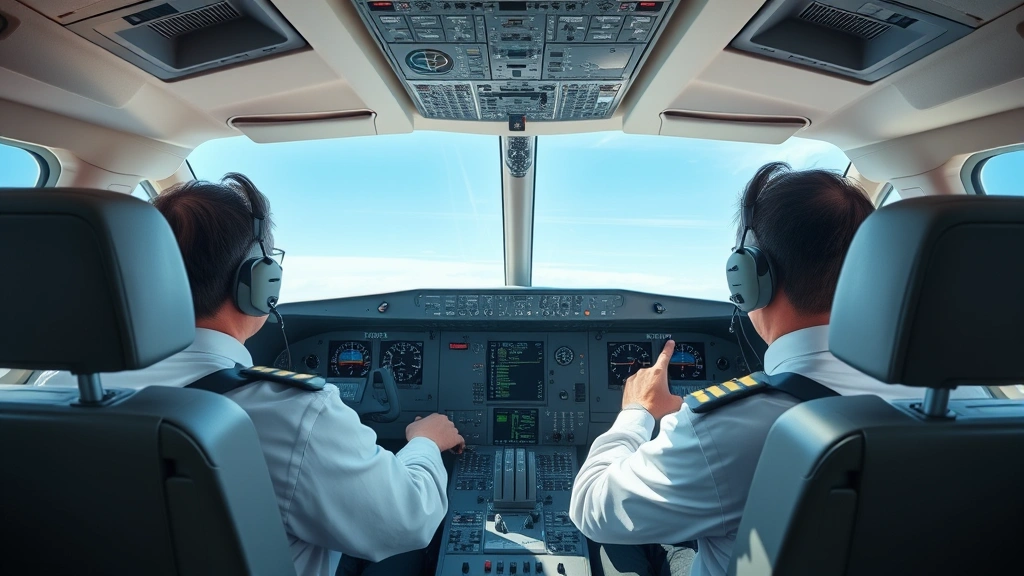
When emergencies occur, pilots follow standardized procedures documented in aircraft operating manuals and airline operations manuals. These procedures represent the distilled wisdom of aviation engineering, accident investigation, and operational experience.
The Hierarchy of Response prioritizes pilot actions logically. First priority: fly the aircraft. Maintaining altitude, airspeed, and control authority supersedes all other considerations. A pilot facing multiple failures might ignore secondary warnings temporarily to focus on fundamental aircraft control. Second priority: determine the problem. Pilots consult checklists, analyze instrument indications, and communicate with crew members to understand what’s happening. Third priority: manage the emergency. Once the problem is identified, pilots execute recovery procedures or prepare for emergency landing.
Checklist Discipline separates professional pilots from amateurs. When warning lights illuminate, experienced pilots don’t rely on memory—they retrieve the appropriate checklist and execute it methodically. These checklists represent thousands of hours of analysis, testing, and refinement. Following them precisely, even under extreme stress, dramatically improves outcomes.
Crew Resource Management maximizes the collective expertise aboard. The captain makes final decisions, but modern cockpit culture encourages all crew members to voice concerns and contribute knowledge. If a first officer notices something the captain missed, speaking up could prevent disaster. This collaborative approach harnesses multiple perspectives and catches errors that individuals might overlook.
Communication with Air Traffic Control provides critical support during emergencies. Controllers clear airspace, vector aircraft toward suitable airports, provide weather information, and coordinate emergency services. Pilots keep controllers informed of their status, capabilities, and intentions, creating shared situational awareness that enhances safety.
Communication and Coordination
Effective communication during flight emergencies involves multiple parties working in coordinated harmony. The cockpit crew communicates internally, with air traffic control, with cabin crew, and with ground-based support personnel.
Cockpit Communication follows standardized phraseology designed for clarity under stress. Pilots use specific terminology, call-and-response procedures, and confirmation techniques that eliminate ambiguity. Rather than casual conversation, cockpit communication employs precise language that ensures everyone understands exactly what’s happening and what actions are required.
Air Traffic Control Coordination becomes increasingly critical during emergencies. Controllers prioritize emergency aircraft, clearing traffic from their path, sequencing them for landing, and providing essential information. Pilots declare emergencies using specific phraseology—”Mayday, mayday, mayday” for distress situations or “Pan, pan, pan” for urgent but non-life-threatening situations. This declaration immediately signals ground personnel that maximum resources should mobilize.
Cabin Crew Briefing ensures flight attendants understand what passengers might experience during emergency procedures. Cabin crew prepares emergency equipment, briefs passengers on evacuation procedures if necessary, and monitors passenger condition. During medical emergencies, flight attendants provide information about passenger status, enabling pilots to determine appropriate response levels.
Ground-Based Support extends beyond air traffic control. Airlines maintain emergency response centers that coordinate with airports, emergency services, medical personnel, and aircraft manufacturers. These support teams provide technical expertise, resource coordination, and decision support to pilots facing unprecedented situations.
The Emergency Landing Process
Emergency landings represent the culmination of crisis management—translating successful problem-solving into safe touchdown and passenger evacuation if necessary. The process involves careful planning, precise execution, and coordinated response from multiple agencies.
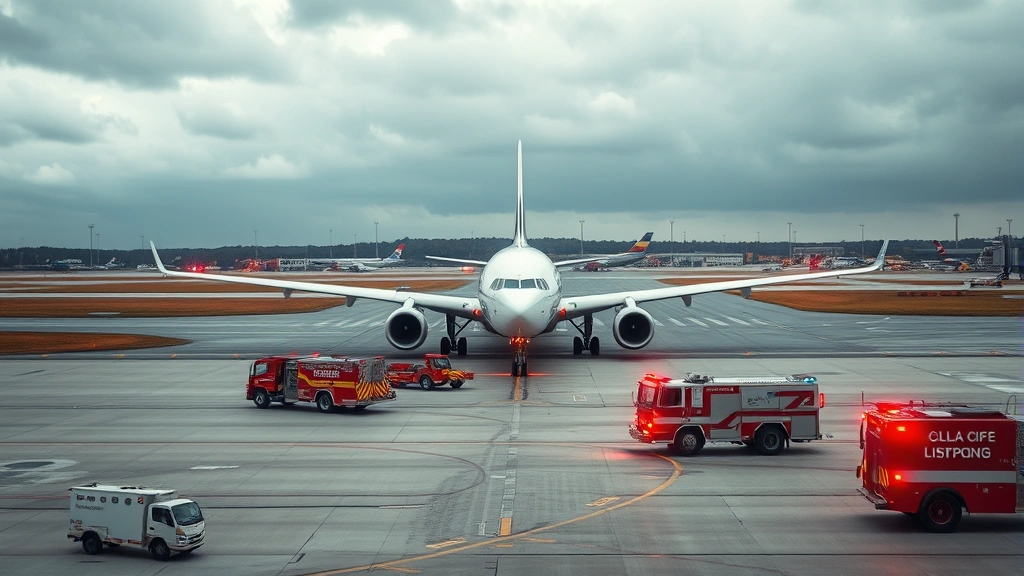
Landing Site Selection depends on aircraft capabilities, emergency type, and available facilities. Pilots assess whether they can reach their destination, divert to the nearest suitable airport, or land immediately if the situation is critical. Controllers provide information about runway lengths, weather conditions, emergency equipment availability, and airport facilities. A United Airlines flight emergency landing at Newark Airport exemplifies coordinated response across multiple agencies.
Approach and Landing Preparation requires pilots to configure the aircraft for landing despite potential system limitations. Engine failures, hydraulic damage, or electrical failures might prevent normal landing gear extension or flap operation. Pilots develop creative solutions—manually extending landing gear, using alternate hydraulic systems, or requesting emergency equipment positioning. Controllers clear airspace, emergency vehicles position themselves, and ground personnel prepare for potential evacuation.
The Actual Landing demands extreme precision. Pilots approach at stabilized speeds and angles, using available instruments and visual references. Ground effect, crosswinds, and runway length become critical factors. Some emergency landings occur on unprepared surfaces—fields, highways, or water—when normal airports are unreachable. Pilots adapt procedures to available resources, prioritizing survivability.
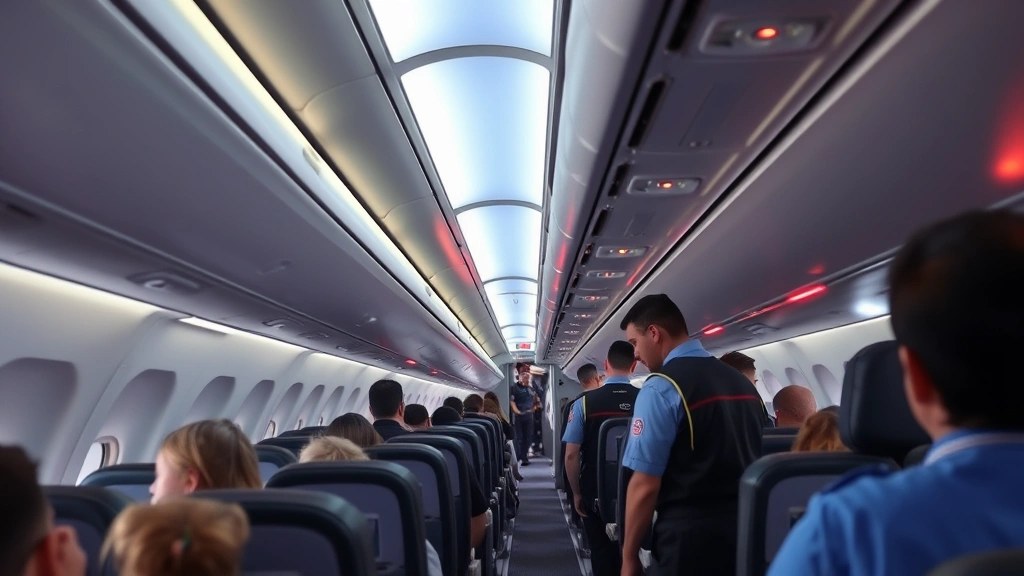
Post-Landing Procedures shift focus to passenger safety and emergency response. If evacuation is necessary, flight attendants direct passengers toward emergency exits, assist those requiring help, and ensure orderly movement away from the aircraft. Emergency services stand ready to assist, provide medical care, and manage the scene. Investigation teams begin documenting the incident immediately, capturing information while it’s fresh.
Passenger Safety Measures
Commercial aviation prioritizes passenger safety through multiple layers of protection. Aircraft design, maintenance procedures, crew training, and emergency protocols all contribute to exceptional safety records.
Aircraft Design Features build redundancy throughout critical systems. Commercial aircraft have multiple hydraulic systems, multiple electrical systems, and multiple engines. Failure of a single system doesn’t prevent aircraft operation—backup systems maintain essential functions. This redundancy means that catastrophic failure requires multiple simultaneous system failures, an extraordinarily rare occurrence.
Maintenance and Inspection prevent emergencies by identifying problems before they become critical. Aircraft undergo regular inspections, component testing, and system checks. Airlines maintain detailed maintenance logs tracking every component’s history. Parts are replaced according to manufacturer specifications, and worn components are removed before failure becomes likely.
Emergency Equipment ensures passenger protection during the worst-case scenarios. Life vests, emergency slides, first aid kits, fire extinguishers, and oxygen masks are installed throughout the aircraft. Cabin crew training emphasizes emergency equipment operation, enabling rapid response when needed. Regular inspections verify that equipment functions properly.
Evacuation Procedures are practiced and tested extensively. Cabin crew undergoes regular training on evacuation procedures, emergency equipment operation, and passenger assistance techniques. Airlines conduct evacuation drills on actual aircraft, ensuring crew members can guide passengers to safety efficiently. Evacuation slides deploy rapidly, emergency exits are clearly marked, and procedures emphasize orderly evacuation.
The Emergency Landing Process
Emergency landings represent the culmination of crisis management—translating successful problem-solving into safe touchdown and passenger evacuation if necessary. The process involves careful planning, precise execution, and coordinated response from multiple agencies.
Landing Site Selection depends on aircraft capabilities, emergency type, and available facilities. Pilots assess whether they can reach their destination, divert to the nearest suitable airport, or land immediately if the situation is critical. Controllers provide information about runway lengths, weather conditions, emergency equipment availability, and airport facilities. A United Airlines flight emergency landing at Newark Airport exemplifies coordinated response across multiple agencies.
Approach and Landing Preparation requires pilots to configure the aircraft for landing despite potential system limitations. Engine failures, hydraulic damage, or electrical failures might prevent normal landing gear extension or flap operation. Pilots develop creative solutions—manually extending landing gear, using alternate hydraulic systems, or requesting emergency equipment positioning. Controllers clear airspace, emergency vehicles position themselves, and ground personnel prepare for potential evacuation.
The Actual Landing demands extreme precision. Pilots approach at stabilized speeds and angles, using available instruments and visual references. Ground effect, crosswinds, and runway length become critical factors. Some emergency landings occur on unprepared surfaces—fields, highways, or water—when normal airports are unreachable. Pilots adapt procedures to available resources, prioritizing survivability.
Post-Landing Procedures shift focus to passenger safety and emergency response. If evacuation is necessary, flight attendants direct passengers toward emergency exits, assist those requiring help, and ensure orderly movement away from the aircraft. Emergency services stand ready to assist, provide medical care, and manage the scene. Investigation teams begin documenting the incident immediately, capturing information while it’s fresh.
Real-World Emergency Cases
History provides compelling examples of pilot expertise, crew coordination, and emergency procedures working in concert to save lives. These cases demonstrate principles in action and reveal how training translates to survival.
Engine Failure Management represents one of aviation’s most dramatic emergencies. When engines fail, pilots must immediately assess whether the aircraft can maintain altitude or must descend. Modern aircraft can operate on single engines, but pilots must manage descent profiles carefully, selecting suitable landing sites. Cases like the AI101 flight status incident showcase how modern systems and pilot skill combine to manage engine emergencies.
Hydraulic System Failures present complex challenges because hydraulic systems control flight surfaces, landing gear, and braking. Total hydraulic failure requires alternate control methods—some aircraft have manual flight control capability, others require creative problem-solving. Pilots trained in these procedures can recover aircraft that would have seemed unflyable decades ago.
Medical Emergencies demand different responses than mechanical failures. When passengers experience heart attacks, strokes, or other serious medical conditions, pilots must determine whether to divert to the nearest airport or continue to the destination. Cabin crew provides medical assessment, pilots coordinate with ground-based medical professionals, and decisions balance medical urgency against flight risks.
The Delta Flight DL555 stranded passengers incident illustrates how emergencies can strand passengers but how airline response procedures activate to provide support and information.
FAQ
What’s the difference between declaring an emergency and actual danger?
Declaring an emergency means pilots are requesting priority handling and maximum ground support. It doesn’t necessarily indicate immediate danger—many declared emergencies result in safe landings with no injuries. Pilots declare emergencies conservatively to ensure they have resources available if situations deteriorate. This precautionary approach has saved countless lives.
Can pilots land aircraft safely with engine failures?
Modern commercial aircraft are designed to operate safely on single engines or, in some cases, with all engines failed if sufficient altitude permits gliding to a landing. Pilots train extensively for engine failure scenarios and understand their aircraft’s capabilities. The famous “Miracle on the Hudson” incident demonstrated that even unprecedented situations can result in safe outcomes with skilled pilots and proper procedures.
How do pilots maintain focus during emergencies?
Extensive training builds automatic responses through repetition. When emergencies occur, pilots follow checklists and procedures they’ve practiced hundreds of times. This automaticity prevents panic and enables clear thinking. Additionally, crew resource management ensures multiple people focus on the problem, with different individuals handling different aspects.
What happens if multiple systems fail simultaneously?
Aircraft design emphasizes redundancy specifically to prevent catastrophic failure from single-system failures. Modern aircraft have multiple independent systems controlling critical functions. Simultaneous failure of multiple independent systems is extraordinarily rare. When it does occur, pilots have alternate procedures, manual controls, and ground support to manage the situation.
How are emergency procedures updated?
Aviation authorities, aircraft manufacturers, and airlines continuously analyze incidents and accidents to identify procedure improvements. When problems are discovered, procedures are updated, pilots receive training on changes, and new standards are implemented across the industry. This continuous improvement process ensures that each incident’s lessons prevent future occurrences.
What training prepares pilots for unexpected emergencies?
Simulator training emphasizes unexpected combinations of failures, requiring pilots to think creatively and adapt procedures to novel situations. While simulators can’t replicate every possible emergency, they develop problem-solving skills, stress management, and decision-making abilities that transfer to real situations. Experienced pilots also study accident investigations, learning from others’ experiences.
How do passengers know if they’re in genuine danger?
Cabin crew maintains communication with passengers during emergencies, providing information about situations and what to expect. Pilots may make announcements explaining what’s happening and what passengers should do. While some anxiety is natural, remember that modern aviation’s safety record reflects decades of engineering, training, and procedure development that prioritizes passenger survival.
What role does technology play in emergency response?
Modern aircraft have sophisticated systems that detect problems, alert pilots to developing issues, and provide diagnostic information. Autopilots can maintain stable flight while pilots focus on problem-solving. Communication systems enable rapid coordination between cockpit, cabin crew, and ground personnel. Advanced navigation systems provide backup options when primary systems fail. Technology augments human expertise rather than replacing it.
Can passengers help during emergencies?
Cabin crew directs passenger actions during emergencies. Following crew instructions, remaining calm, and assisting others if directed are the most helpful passenger responses. Panic spreads rapidly and can compromise evacuation efficiency. Maintaining composure and cooperating with crew enables smooth emergency procedures.
How do airlines support passengers after emergencies?
Airlines activate crisis management procedures following serious incidents. They provide accurate information, medical care if needed, accommodation if passengers are stranded, and psychological support for traumatized individuals. Insurance companies handle claims, and airlines often provide compensation beyond minimum requirements. Support continues for months or years if passengers require ongoing assistance.