Flight Duration Chicago to NYC? Frequent Traveler Insight
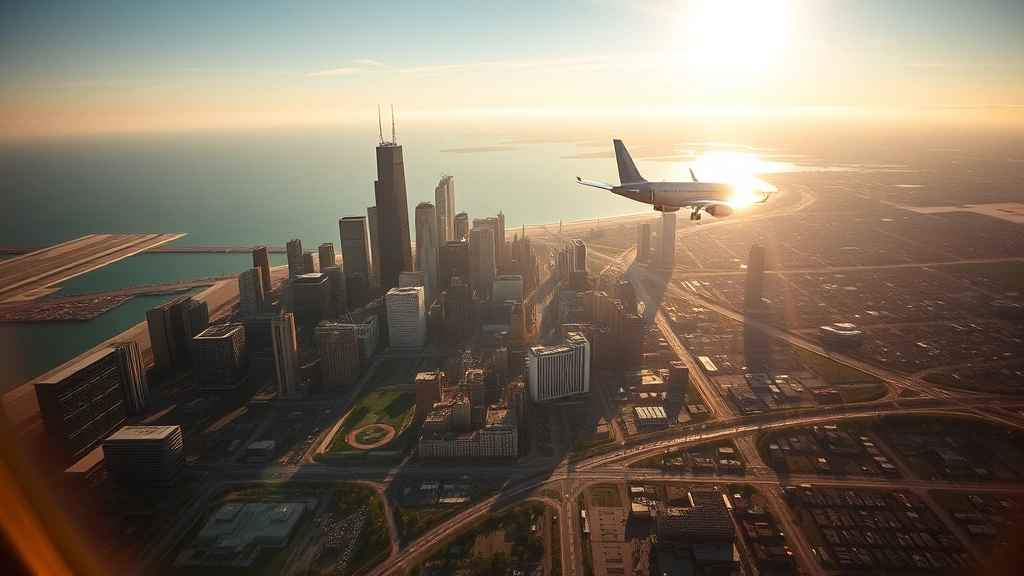
The flight from Chicago to New York City is one of America’s most traveled routes, connecting two of the country’s most dynamic metropolitan areas. As a frequent traveler who has logged countless hours on this corridor, I can tell you that understanding the true flight duration—beyond just the basic air time—is essential for planning your trip efficiently. Whether you’re a business traveler rushing between meetings or a leisure adventurer exploring the East Coast, knowing what to expect makes all the difference.
This route carries millions of passengers annually across multiple carriers, and the experience varies significantly depending on factors like your airline choice, time of booking, and travel season. The direct flight time itself is surprisingly brief, but the complete journey involves several considerations that frequent flyers have learned to navigate strategically.
Actual Flight Time and Distance
The direct flight time from Chicago’s O’Hare International Airport (ORD) or Midway Airport (MDW) to New York’s major airports—LaGuardia (LGA), JFK, or Newark (EWR)—is approximately 2 hours and 45 minutes to 3 hours. This covers the roughly 790-mile distance between the two cities. However, this is the actual airtime, and it’s crucial to understand that your complete travel experience encompasses much more than these numbers suggest.
The northeastern corridor experiences consistent air traffic, and pilots typically cruise at about 35,000-37,000 feet on this route. Weather patterns, jet streams, and air traffic control routing can cause variations of 10-15 minutes in either direction. I’ve experienced flights that completed in 2 hours 40 minutes with favorable tailwinds and others that stretched to 3 hours 15 minutes due to holding patterns near New York airspace.
Distance-wise, the great circle route—the shortest path between two points on a sphere—is what airlines actually follow. This differs slightly from straight-line distances you might see on a map, but it’s optimized for fuel efficiency and speed. The actual routing assigned by air traffic control can add or subtract a few miles depending on congestion and weather avoidance procedures.
Factors Affecting Your Journey Duration
Several variables impact your total travel time beyond the basic flight duration. Seasonal weather patterns significantly influence flight times, particularly during winter months when jet stream positioning can either accelerate or slow your eastbound journey. Spring and fall typically offer the most predictable flight times, while summer thunderstorm activity around the Great Lakes and Ohio Valley can force altitude changes or routing adjustments.
Wind conditions represent the most dramatic variable. Westbound flights returning to Chicago from New York typically require 30-45 minutes longer than eastbound flights due to prevailing westerly winds. If you’re planning a round trip, expect the return journey to take noticeably longer—usually 3 hours 15 minutes to 3 hours 45 minutes.
Time of day matters too. Early morning flights often depart precisely on schedule with minimal delays, while afternoon and evening flights frequently experience congestion in both Chicago and New York airspace. I’ve noticed that flights departing Chicago before 7 AM typically arrive with remarkable consistency, while 4-6 PM departures can easily lose 20-30 minutes to ground delays alone.
Your specific departure and arrival airports influence the total journey. Chicago Midway (MDW) is closer to downtown Chicago but typically has fewer New York connections. O’Hare (ORD) offers more frequency and generally better scheduling. In New York, LaGuardia and Newark are closer to Manhattan than JFK, affecting your ground transportation time significantly.
Airport Procedures and Ground Time
Here’s what frequent travelers understand that casual passengers often overlook: your actual door-to-door travel time includes substantial ground components. At Chicago, budget 30-45 minutes from arrival at the airport to getting through security, depending on your status and the time of day. TSA PreCheck or Clear memberships can reduce this to 10-15 minutes, which I consider absolutely essential for this route.
Boarding typically begins 30-40 minutes before departure, and pushback occurs 10-15 minutes after the scheduled departure time. Taxi-out time from your gate to the runway adds another 15-25 minutes depending on traffic. Once airborne, you’re looking at approximately 2 hours 45 minutes of actual flight time. Then comes landing procedures: descent, approach, and landing takes 20-30 minutes, followed by taxi-in time of 10-20 minutes depending on your arrival airport and which terminal gate you’re assigned.
Deplaning typically requires 10-15 minutes depending on aircraft size and passenger cooperation. From there, you’re either heading to baggage claim (add 15-30 minutes) or connecting to another flight. If you’re connecting, the New York airports require you to navigate between terminals, which can take 10-30 minutes depending on the connection and whether you have checked baggage.
Frequent travelers learn to optimize these ground times. I always book TSA PreCheck and maintain elite status with at least one major airline to access priority boarding and baggage handling. These perks can shave 45 minutes off your total travel time across a round trip.
Airlines and Schedule Variations
Multiple carriers serve the Chicago-New York route, and their scheduling philosophies differ considerably. Major carriers like American, Delta, United, and Southwest all operate multiple daily flights on this corridor. American and United, given their hub positions in Chicago and New York respectively, offer the most frequency and often the most competitive pricing.
Southwest operates several daily flights and is known for relaxed boarding procedures and generous baggage policies, but their open seating can extend boarding time. Legacy carriers typically offer more premium cabin options and better frequent flyer benefits, which matter if you’re flying this route regularly.
Flight duration can vary by 10-15 minutes between carriers due to different cruise altitudes and routing preferences, though this is minimal. The more significant differences appear in schedule reliability and ground handling efficiency. United’s operations at O’Hare tend to be tightly choreographed, while Southwest’s more relaxed approach occasionally impacts on-time performance.
I’ve found that booking morning flights consistently yields better on-time performance than afternoon or evening options. Tuesday through Thursday departures also tend to run more smoothly than weekend flights when leisure travel creates congestion.
Booking Strategies for Frequent Travelers
After flying this route dozens of times, I’ve developed strategies that optimize both cost and time. First, understand that nonstop is almost always faster than any connection, even though it might seem counterintuitive. The Chicago-New York corridor is so heavily traveled that connections through hubs add 2-4 hours to your journey and introduce delay risks.
Book directly with airlines rather than through third-party sites if you value schedule flexibility. This gives you access to schedule changes and potential upgrades. Joining airline loyalty programs is non-negotiable for frequent travelers on this route—the priority boarding and baggage benefits alone save 30+ minutes per trip.
Consider that flying from Midway instead of O’Hare might offer faster security lines and simpler airport navigation, even though O’Hare has more flight options. The time saved navigating a smaller airport can offset the limited schedule frequency. Similarly, Newark airport often has shorter security lines than LaGuardia or JFK, despite being slightly farther from Manhattan.
Timing matters significantly. Tuesday, Wednesday, and Thursday flights are typically cheaper and more reliable than weekend flights. Early morning departures (before 7 AM) consistently deliver the best on-time performance. If you must fly afternoon, aim for 2-3 PM rather than 4-6 PM when peak congestion hits.
For comparison, if you’re considering Chicago flights to Houston, that route runs about 2 hours 45 minutes to 3 hours, similar to New York. The Chicago to New Orleans flights take roughly 2 hours 30 minutes. Understanding these regional flight times helps contextualize your New York journey within the broader Midwest travel ecosystem.
Comparing with Other Routes
The Chicago-New York flight time places this route in an interesting middle ground. It’s shorter than LAX to Tokyo flight time, which stretches over 11 hours, yet longer than regional hops. Compared to flights from Dallas to Atlanta, which typically run 2 hours 15 minutes, the Chicago-New York route is noticeably longer.
What makes this route unique is the frequency and reliability. Major carriers operate 15-20 flights daily in each direction, meaning if you miss one flight, another departs within an hour. This redundancy is valuable for business travelers and frequent flyers who need flexibility.
The route’s popularity also means competitive pricing, especially if you’re flexible on dates and times. Fare variation can be dramatic—the difference between a Tuesday morning flight and a Friday evening flight might be $100-200, making schedule optimization valuable from a cost perspective too.
If you’re interested in understanding airline policies better, learning about automatic airline flight refunds can help you understand your rights if delays occur. This knowledge becomes particularly valuable on frequently traveled routes like Chicago-New York where disruptions occasionally happen.
For those considering multiple trips to this corridor, best travel destinations for solo travelers includes both Chicago and New York, making this route a gateway for broader East Coast exploration. Understanding your flight time helps you plan multi-city itineraries more effectively.
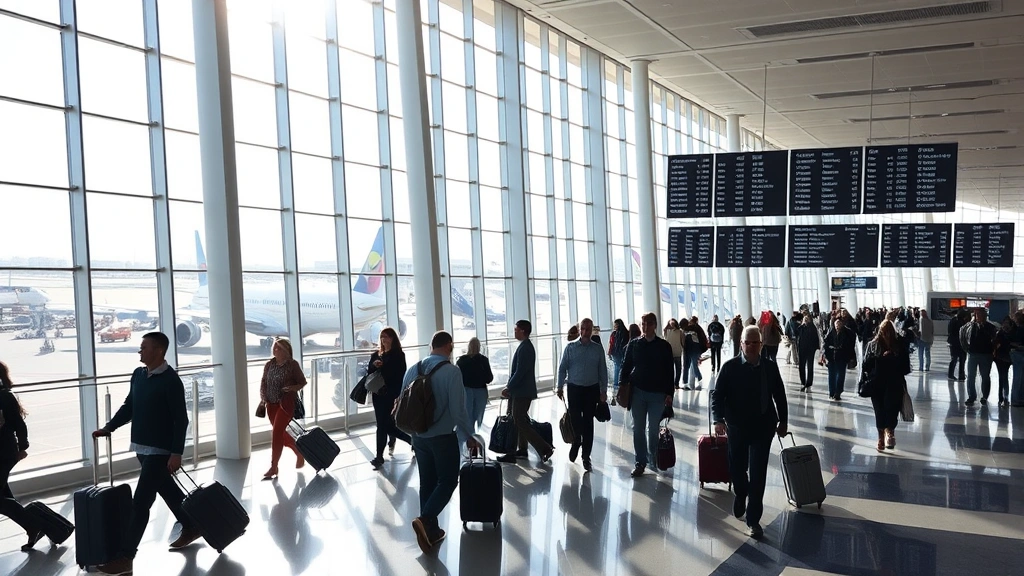
The practical reality for frequent travelers is that while the actual flight duration is just under 3 hours, your complete travel experience typically spans 5-6 hours from home departure to hotel arrival. This includes ground transportation, airport procedures, boarding, deplaning, and baggage claim. Savvy travelers account for this full timeline when scheduling meetings or planning connections.
Weather considerations deserve special mention. Chicago winters can cause occasional delays, though modern de-icing procedures have made this less problematic than historically. New York’s summer thunderstorms occasionally create holding patterns, adding 15-30 minutes to descent and landing procedures. I always check weather forecasts for both cities before booking and build in buffer time for important connections.
The Chicago-New York corridor has evolved significantly with modern air traffic management systems. Real-time data sharing between Chicago’s air traffic control center and New York’s approach facilities allows for better flow management, which has actually improved punctuality over the past decade. This means your flight is statistically likely to arrive close to schedule, which is reassuring for business travelers.
One often-overlooked factor is aircraft type. The route is served by various narrow-body jets—primarily Boeing 737, Airbus A320, and Bombardier regional jets. The larger, newer aircraft (737 MAX, A320neo) sometimes cruise at slightly different speeds and altitudes, causing minor timing variations. However, these differences rarely exceed 5-10 minutes.
For those planning this journey, I recommend checking FAA flight delay information for real-time status updates and DOT airline consumer protection guidelines for understanding your rights. Additionally, TSA PreCheck information can expedite your security process significantly. For destination planning, NYC tourism board and Chicago tourism authority offer comprehensive guides to maximize your time in each city.
FAQ
How long is a typical Chicago to New York flight?
Direct flights typically take 2 hours 45 minutes to 3 hours of actual airtime. However, your complete travel experience from home to destination usually spans 5-6 hours when accounting for ground transportation, airport procedures, and baggage claim.
Which New York airport is closest to Manhattan?
LaGuardia (LGA) is technically closest to Manhattan at about 8 miles, but Newark (EWR) often provides faster overall travel due to less congestion. JFK is furthest at approximately 15 miles but offers international connections if you’re continuing beyond New York.
Is TSA PreCheck worth it for this route?
Absolutely. TSA PreCheck reduces security processing from 30-45 minutes to 10-15 minutes. On a route you fly even 4-5 times annually, the $85 five-year membership pays for itself in time savings alone. Combined with elite airline status, you can cut 45+ minutes off your total travel time per trip.
What’s the best time of day to fly Chicago to New York?
Early morning flights (before 7 AM) have the best on-time performance and typically the lowest fares for advance bookings. Avoid 4-6 PM departures when both Chicago and New York airspace experience peak congestion.
How much longer is the return flight to Chicago?
Westbound flights typically take 30-45 minutes longer than eastbound flights due to prevailing westerly winds. Expect 3 hours 15 minutes to 3 hours 45 minutes for your return journey, compared to approximately 2 hours 45 minutes eastbound.
Are connecting flights ever faster than nonstops?
No. Even with perfect connections, adding a stop introduces 2-4 hours of additional travel time through boarding, deplaning, and potential delays. The Chicago-New York corridor has such frequent nonstop service that connections never make sense for this route.
Which airline typically has the fastest flights on this route?
Flight times are remarkably consistent across carriers (within 5-10 minutes), so speed differences are negligible. Focus instead on schedule reliability, frequent flyer benefits, and ground handling efficiency when choosing your airline.