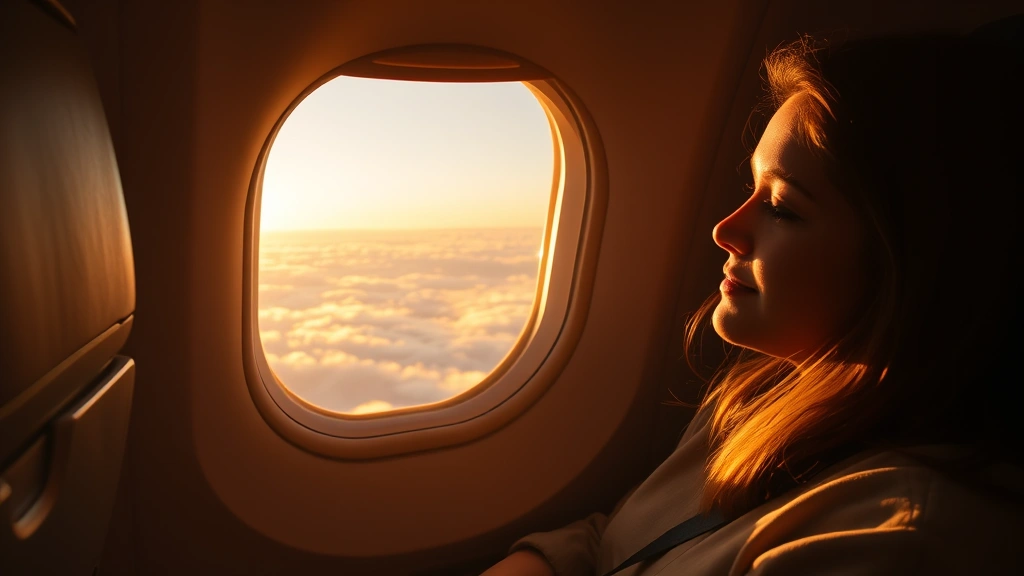
Flying anxiety affects millions of travelers worldwide, transforming what should be an exciting journey into a source of dread and stress. Whether you’re planning Atlanta to New York flights for business or dreaming of top travel destinations in 2025, fear of flying shouldn’t hold you back from experiencing the world. The good news? Flight anxiety is highly treatable, and with the right strategies, you can transform your relationship with air travel from terrifying to manageable—or even enjoyable.
Modern aviation is remarkably safe, yet our brains often struggle to accept this fact when we’re 30,000 feet in the air. Understanding both the science behind your fear and practical coping mechanisms can help you reclaim your confidence as a traveler. This comprehensive guide combines expert advice from aviation psychologists, seasoned flight attendants, and nervous flyers who’ve successfully conquered their anxieties. You’ll discover evidence-based techniques, preparation strategies, and mindset shifts that work before, during, and after your flight.
Understanding Your Fear of Flying
Flight anxiety typically stems from a combination of factors: loss of control, fear of the unknown, claustrophobia, or catastrophic thinking patterns. Recognizing which elements trigger your specific anxiety is the first step toward addressing it effectively. Many nervous flyers report that their anxiety peaks during takeoff and landing—the phases where they feel least in control of the aircraft’s movements.
The fear of flying isn’t irrational; it’s a natural human response to an unfamiliar environment combined with cognitive biases that make us overestimate risk. Our brains evolved in a world where we stayed on solid ground, so being suspended in air contradicts our evolutionary instincts. This doesn’t mean you’re weak or abnormal—it means your threat-detection system is working overtime in an environment where it’s unnecessary.
When planning trips to Chicago to Houston flights or other routes, many anxious flyers avoid booking altogether, missing opportunities for adventure and connection. Others white-knuckle through flights, arriving exhausted before their journey even begins. The good news is that exposure combined with education and coping strategies creates lasting change.
The Science of Flight Safety
Let’s address the elephant in the room: the fear that the plane will crash. Statistical reality offers tremendous reassurance. Commercial aviation is the safest form of long-distance travel by a substantial margin. According to the Federal Aviation Administration, the odds of being in a plane crash are approximately 1 in 11 million. To put this in perspective, you’re statistically safer in the air than driving to the airport.
Modern aircraft undergo rigorous maintenance schedules, with components inspected, tested, and replaced according to strict timelines. Pilots receive extensive training—often exceeding 1,500 flight hours before commanding a commercial aircraft—and undergo regular proficiency checks throughout their careers. Air traffic control systems employ redundant technology, and aircraft themselves have multiple backup systems for every critical function.
Turbulence, while uncomfortable, is not dangerous. Aircraft are engineered to withstand forces far exceeding what nature can produce. Pilots encounter turbulence regularly and adjust altitude or route to minimize passenger discomfort—not because the plane is in danger, but because comfort matters. Understanding these technical realities helps reprogram your brain’s threat response from “this is dangerous” to “this is normal and safe.”
When you’re preparing for trips like Boston to Chicago flights, remind yourself that thousands of flights operate safely every single day. The infrastructure supporting aviation safety represents humanity’s most rigorous commitment to passenger protection across any transportation method.
Pre-Flight Preparation Strategies
Preparation is your secret weapon against flight anxiety. The more you know about what to expect, the less your mind will fill in gaps with catastrophic scenarios. Begin by researching your specific flight: the aircraft type, typical weather conditions for your travel date, and the flight route. Websites like Flightradar24 let you track actual flights in real-time, demystifying the journey.
Schedule your flight strategically. Morning flights often encounter less turbulence, and daylight flights feel less claustrophobic than red-eyes. If you’re flying to best travel destinations for couples, consider how your flight timing affects your overall journey experience.
Consider taking a fear of flying course. Many airlines and independent organizations offer workshops combining education, exposure, and coping techniques. These courses accelerate your progress because they’re specifically designed for anxious flyers and normalize your experience by connecting you with others facing similar challenges.
Physical preparation matters. Exercise regularly in the weeks before your flight—this reduces overall anxiety and improves sleep quality. Avoid excessive caffeine 24 hours before flying, as it amplifies anxiety symptoms. Establish a consistent sleep schedule leading up to your flight; sleep deprivation significantly worsens anxiety.
Create a “flight day” ritual that feels calming and grounding. This might include a favorite breakfast, specific music playlist, or meditation session. Rituals signal safety to your nervous system and create predictability, which anxious brains find comforting.
Managing Anxiety at the Airport
The airport environment itself can trigger anxiety—crowds, unfamiliar spaces, and the proximity to your feared situation (the plane) all converge. Arrive early, giving yourself plenty of time to navigate the airport without rushing. Rushing activates your stress response and makes anxiety worse.
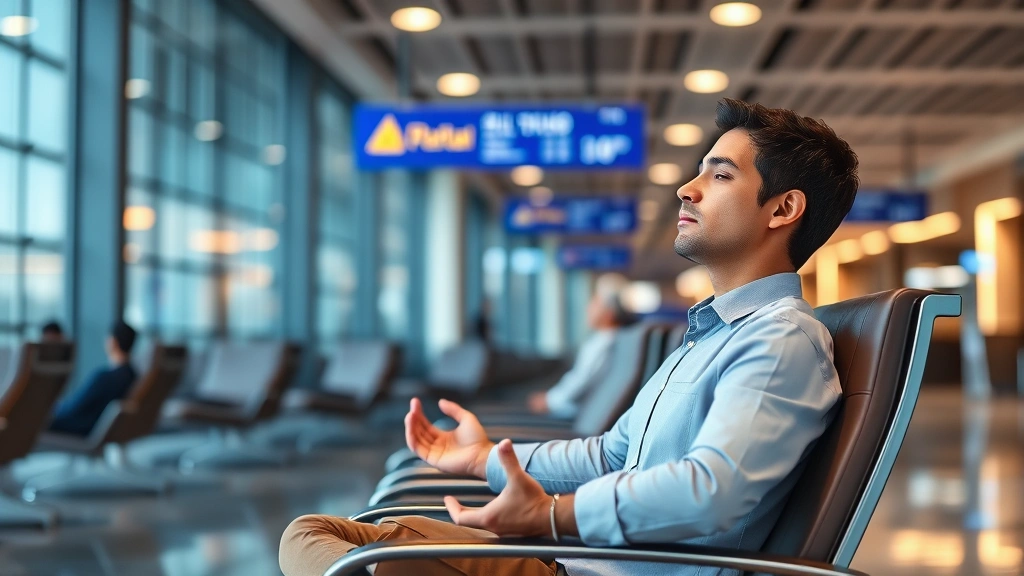
Once through security, find a quiet space away from crowds. Many airports now have meditation rooms or quiet zones. If not, find a less-trafficked gate area or seating zone. Spend 10-15 minutes practicing grounding techniques or simply breathing slowly while observing your surroundings without judgment.
Use your senses intentionally. Bring items that engage your senses in calming ways: a favorite scent (essential oils or perfume), smooth stone or tactile object to hold, comfortable clothing that feels safe. These sensory anchors help keep you grounded in the present moment rather than lost in anxious thoughts about the flight.
Limit information consumption at the airport. Avoid checking weather forecasts obsessively or reading flight news. Your anxious brain will interpret neutral information through a catastrophic lens. Trust that if conditions were dangerous, flights wouldn’t operate.
Consider having a trusted friend or family member accompany you to the airport, even if they’re not flying. Their calm presence during check-in and security can significantly reduce pre-flight anxiety. If flying solo, connect with someone via phone or video call before boarding.
Techniques for In-Flight Calm
Once you’re on the aircraft, your coping toolkit becomes essential. Position yourself strategically: window seats give you control over the shade and reduce the sensation of movement, while aisle seats offer easier access to bathrooms and a sense of less confinement. Over-the-wing seating experiences less turbulence. Choose based on what feels most secure to you.
Bring noise-canceling headphones and a carefully curated playlist. Music serves multiple functions: it masks engine sounds that anxious brains interpret as danger signals, provides a focal point for attention, and triggers calming responses through rhythm and melody. Create a playlist in advance that genuinely comforts you.
Distraction is your friend during flight. Engage with materials that require genuine mental focus: challenging puzzles, engaging books, movies you’ve wanted to watch, or educational content. Passive consumption (scrolling social media) allows your mind to wander toward anxious thoughts. Active engagement keeps your prefrontal cortex occupied, reducing amygdala activation.
Communicate with flight attendants about your anxiety. They’ve worked with countless nervous flyers and won’t judge you. Knowing someone nearby is aware and checking in provides psychological reassurance. Some airlines offer special support for anxious flyers, including visits to the cockpit (on select flights) where pilots explain the aircraft and answer questions.
Movement helps manage anxiety. If you’re in a window seat, get up every 30-45 minutes and walk the aisle. Physical movement reduces stress hormones and provides a sense of agency. Isometric exercises (tensing and releasing muscle groups) can be done at your seat and help discharge nervous energy.
Breathing and Mindfulness Exercises
Your breath is the most portable anxiety-management tool you possess. The 4-7-8 breathing technique works remarkably well for acute anxiety: inhale through your nose for 4 counts, hold for 7 counts, exhale through your mouth for 8 counts. Repeat 4-8 times. This technique activates your parasympathetic nervous system, directly counteracting the stress response.
Box breathing offers another powerful option: inhale for 4 counts, hold for 4 counts, exhale for 4 counts, hold for 4 counts. Repeat 5-10 times. The rhythm creates a meditative state and gives your anxious mind something concrete to focus on.
Progressive muscle relaxation involves systematically tensing and releasing muscle groups throughout your body. Start with your feet, tensing them for 5 seconds, then releasing. Move upward through calves, thighs, glutes, abdomen, chest, arms, shoulders, neck, and face. This practice requires focus, prevents dissociation, and leaves your body physically more relaxed.
Mindfulness meditation, even for just 5-10 minutes, significantly reduces in-flight anxiety. Apps like Headspace and Calm offer guided meditations specifically for anxiety and travel. The key is observing thoughts without judgment—noticing anxious thoughts as mental events rather than truths.
The 5-4-3-2-1 grounding technique anchors you in present reality: identify 5 things you can see, 4 you can touch, 3 you can hear, 2 you can smell, 1 you can taste. This sensory focus interrupts the anxiety loop and reminds your nervous system that you’re safe in this moment.
Building Long-Term Confidence
Conquering flight anxiety isn’t about one perfect flight—it’s about gradually building evidence that flying is safe and manageable. Each flight you complete successfully reprograms your brain’s threat assessment. Start with short flights if possible, then gradually take longer journeys. When planning road trips versus flights, remember that building flight confidence opens doors to destinations and experiences that roads alone cannot reach.
Keep a “flight success journal” documenting each flight you complete, noting what coping strategies worked best. Over time, you’ll identify your personal anxiety management formula. This journal also serves as evidence when anxious thoughts arise—you can review past successes and remind yourself that you’ve done this before.
Consider cognitive behavioral therapy (CBT) with a therapist specializing in anxiety disorders. CBT specifically addresses the thought patterns that fuel flight anxiety, replacing catastrophic thinking with realistic assessment. Research shows CBT combined with exposure to flying produces the most lasting results.
Some people benefit from short-term medication support. Anti-anxiety medications taken a few hours before flying can take the edge off anxiety enough to engage with coping strategies. This isn’t a permanent solution but can be helpful during the confidence-building phase. Discuss options with your physician.
Celebrate progress genuinely. Each flight without avoidance, each moment of managed anxiety, each successful landing represents victory. These small wins accumulate into genuine confidence. You’re not aiming for zero anxiety—you’re aiming for anxiety that doesn’t prevent you from flying and experiencing the world.
Remember that nervous flyers successfully fly millions of times annually. Your anxiety doesn’t mean you’re incapable of flying; it means you’re human with a sensitive threat-detection system. With proper tools, support, and gradual exposure, you can transform your relationship with flight from something you dread into something you manage with confidence.
FAQ
Is it normal to feel anxious before flying?
Absolutely. Many people experience some level of flight anxiety, ranging from mild nervousness to clinical phobia. You’re far from alone, and the strategies in this guide work for people across the anxiety spectrum.
Can I take medication for flight anxiety?
Yes, consult your doctor about options. Short-acting anti-anxiety medications can help, but they work best combined with other coping strategies rather than as a sole solution. Avoid self-medicating with alcohol, which can increase anxiety and impair your ability to use coping techniques.
What should I do if I have a panic attack during a flight?
Alert a flight attendant immediately. They’re trained to help. Use your breathing techniques, ground yourself with the 5-4-3-2-1 exercise, and remind yourself that panic attacks, while uncomfortable, aren’t dangerous. The feelings will pass. Flight attendants have emergency oxygen and medical equipment available if needed.
Is virtual reality exposure therapy effective for flight anxiety?
Research shows VR exposure therapy can be effective, especially combined with education and other coping strategies. VR allows you to experience flight scenarios in a controlled environment, gradually building confidence before actual flying.
How many flights does it typically take to feel comfortable?
This varies by individual, but research suggests 4-6 successful flights with consistent coping strategy use often produces noticeable confidence improvement. Some people see significant changes after one successful flight; others need more exposure. Consistency matters more than the number itself.
Should I tell people I’m nervous about flying?
Sharing with trusted friends or family can reduce shame and increase support. Flight crews appreciate knowing about anxiety because they can provide reassurance. However, avoid discussing anxiety with other nervous flyers before your flight, as shared worries can amplify anxiety.
What’s the difference between flight anxiety and a flying phobia?
Flight anxiety is discomfort or nervousness about flying that you can typically work through. A phobia involves intense, overwhelming fear that leads to avoidance behavior and significantly impacts life quality. Phobias may require professional intervention like CBT or exposure therapy, though the same coping strategies help both conditions.


