Discovery Flight: A Pilot’s First-Hand Experience
There’s a moment suspended between earth and sky where everything changes. For thousands of aviation enthusiasts each year, that moment arrives during a discovery flight—their first genuine experience as a pilot, hands on the controls of a real aircraft. Unlike commercial flights where you’re a passenger watching the world shrink below, a discovery flight puts you in the left seat, experiencing the profound responsibility and exhilaration of flying. This comprehensive guide explores what awaits you during this transformative experience, drawing from real pilot accounts and industry insights.
A discovery flight is fundamentally different from air tourism or scenic flights. While those experiences offer spectacular views, a discovery flight is an introduction to actual piloting—learning how to control pitch, roll, and yaw, understanding the instruments that guide you, and discovering whether aviation might become your lifelong passion. It’s an investment in self-knowledge, a chance to determine if you possess the temperament, aptitude, and genuine desire to pursue a pilot’s license. For many, it’s the spark that ignites a career; for others, it’s the adventure of a lifetime.
What Exactly Is a Discovery Flight?
A discovery flight is a structured introductory flight experience, typically lasting 60-90 minutes, where a certified flight instructor takes you aloft in a general aviation aircraft—usually a Cessna 172 or similar single-engine plane. The instructor handles takeoff and landing while you, the student, control the aircraft during the cruise portion of the flight. This isn’t a scenic tour; it’s hands-on aviation education designed to give you authentic insight into what flying entails.
The experience serves multiple purposes. Flight schools use discovery flights as recruitment tools, introducing potential students to the reality of flying before they commit to extensive training. For individuals considering a career change or exploring new hobbies, it provides invaluable information about whether aviation resonates with you. Some people book discovery flights as milestone celebrations—birthdays, anniversaries, or achievements—while others are simply driven by curiosity about what it feels like to pilot an aircraft.
The distinction matters: commercial airline flights are passive experiences where you trust pilots you never meet. A discovery flight is active participation in the fundamental act of aviation. You’re not observing; you’re doing. This fundamental difference explains why discovery flights profoundly affect so many people—they transform aviation from an abstract concept into embodied, lived experience.
The Pre-Flight Preparation and Briefing
Your discovery flight begins long before wheels leave the ground. Upon arriving at the flight school, you’ll complete paperwork confirming your health status and understanding of basic safety procedures. The Federal Aviation Administration has minimal restrictions for discovery flights—you generally need to be in reasonable health, able to reach the flight controls, and comfortable with small aircraft. Unlike commercial pilots, discovery flight students don’t require special medical certification.
Your instructor will then conduct a comprehensive ground briefing, typically 15-30 minutes. They’ll explain the aircraft’s basic systems: engine operation, fuel systems, flight controls, and instrumentation. You’ll learn the difference between aileron (controlling roll), elevator (controlling pitch), and rudder (controlling yaw). They’ll discuss what you’ll experience during different phases of flight and explain the instruments you’ll be monitoring. This briefing isn’t overwhelming technical jargon; it’s practical education designed to help you understand what’s happening throughout your flight.
The preflight inspection follows—a critical safety procedure where your instructor walks you around the aircraft, checking fuel quantity, tire condition, control surface movement, and dozens of other factors. This “walk-around” is where pilots catch potential problems before flight. You’ll learn why aviation maintains such rigorous safety protocols and why pilots never cut corners on preflight checks. Seeing your instructor’s meticulous attention to detail during this inspection builds confidence in the safety of your upcoming flight.
Taking the Controls: Your First Moments as Pilot
The engine starts with a mechanical roar that vibrates through your entire body. The propeller spins to life, and you feel the aircraft’s power through the seat beneath you. Your instructor taxis the aircraft to the runway, and you’re hearing real-time radio communication with air traffic control, understanding the choreography of controlled airspace. Then comes the moment: the instructor advances the throttle, the aircraft accelerates down the runway, and you feel the wheels leave the earth.
For most discovery flight students, this moment—the actual liftoff—is profoundly emotional. You’re no longer thinking about what flying means in abstract terms; you’re experiencing it physically. Your stomach might flutter. Your hands might shake slightly on the yoke. Your breathing becomes more conscious. These reactions are completely normal and shared by virtually every discovery flight student. The instructor expects them and has calibrated the experience to help you transition from passenger to pilot.
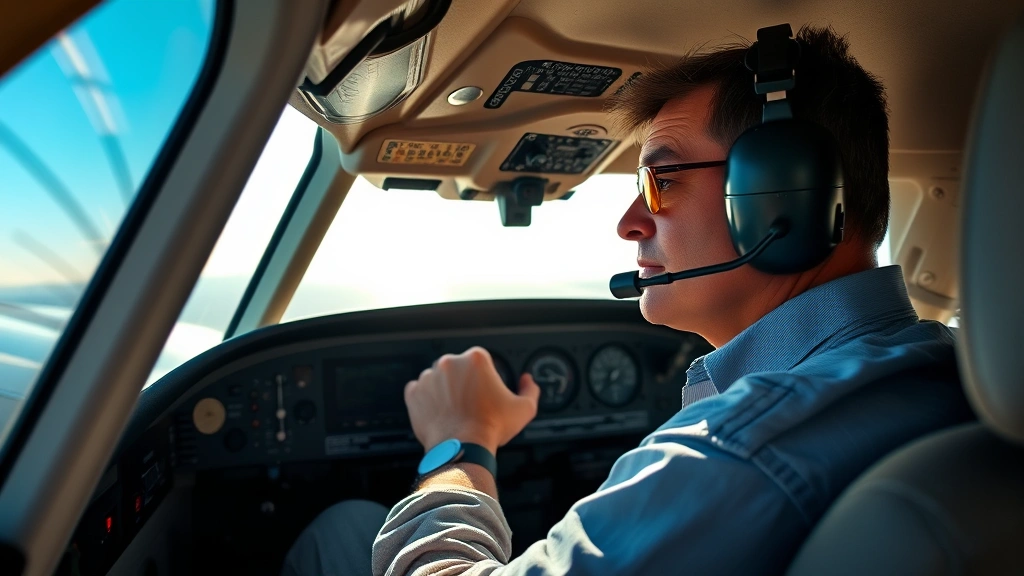
Once the aircraft reaches a safe altitude—typically 2,000-3,000 feet—your instructor will guide your hands to the yoke and say something like, “You have the controls.” This handoff is the threshold moment. From this point forward, your inputs determine the aircraft’s direction and attitude. You’re genuinely flying the plane. The responsibility feels immediate and real. Your instructor is monitoring everything and will take control if necessary, but for this moment, you’re the pilot.
Most discovery flight instructors recommend starting with straight-and-level flight. You’ll practice maintaining altitude, heading, and airspeed—the fundamental skills of aircraft control. It’s more challenging than it appears. The aircraft responds to inputs with slight delays. Overcontrolling causes oscillation. Smooth, gentle inputs work better than aggressive corrections. Within minutes, you’ll develop an intuitive sense for how the aircraft responds to your control inputs, and the initial nervousness often transforms into genuine enjoyment.
The Sensory Experience and Physical Sensations
Flying a small aircraft engages your senses in ways commercial aviation never does. The engine’s constant vibration and roar become the soundtrack of your experience. Wind noise increases during climbs and descents. You feel the aircraft’s attitude changes physically—climbing produces a slight pressure against the seat back, while descending creates a subtle weightless sensation. Banking turns create lateral G-forces that press you against the side of your seat.
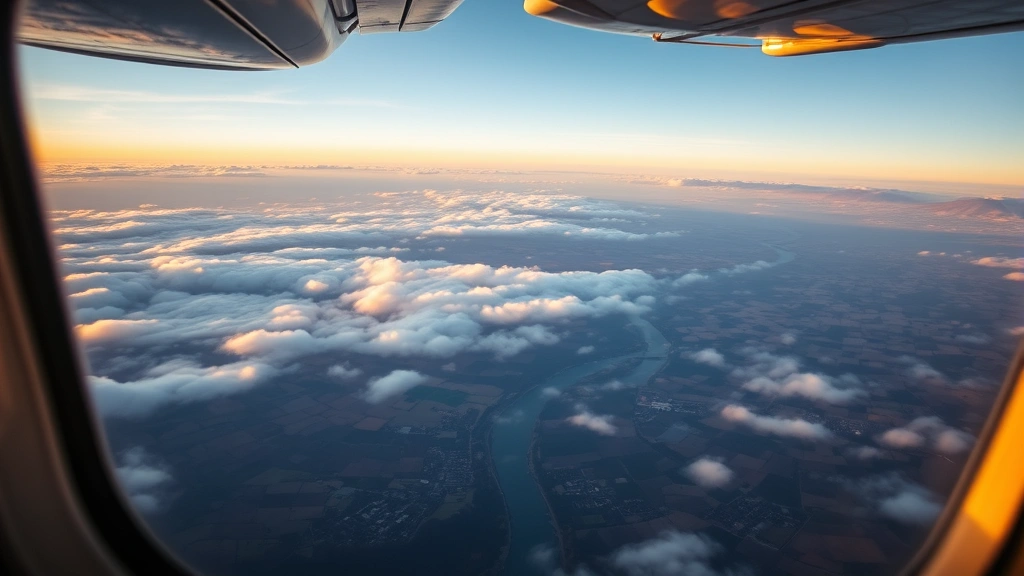
Visually, the experience is stunning. From 3,000 feet, the landscape below displays patterns invisible from ground level: the geometry of farmland, the sinuous curves of rivers, the relationships between towns and natural features. On clear days, you can see 20-30 miles in every direction. The horizon stretches impossibly far, and the curvature of the earth becomes apparent. Many discovery flight students report that this visual perspective fundamentally shifts their understanding of geography and scale.
The sensory combination—engine vibration, wind noise, physical movement, visual expansion, and the knowledge that you’re controlling this machine—creates a multisensory experience that photos and videos cannot capture. This is why discovery flights consistently change people’s relationships with flying and travel. Whether you’re planning Houston to Orlando flights for vacation or exploring Chicago to Austin flights for business, having flown a small aircraft changes how you experience commercial aviation.
Learning the Fundamentals During Flight
Beyond basic straight-and-level flight, your instructor will introduce fundamental maneuvers. Gentle turns are the most common—your instructor will guide you through 10-15 degree banks in both directions, teaching you how to coordinate aileron input with rudder input to execute smooth turns. You’ll practice maintaining altitude while turning, a skill that requires dividing your attention between multiple instruments and outside references.
Many instructors introduce basic climbs and descents—changing the aircraft’s pitch attitude to gain or lose altitude while maintaining heading. These maneuvers feel counterintuitive initially; you might expect climbing to require pulling back harder on the yoke, but excessive pitch changes cause inefficient flight and discomfort. Your instructor will emphasize smooth, coordinated inputs that produce graceful changes in the aircraft’s flight path.
Stalls are sometimes introduced during discovery flights, though this depends on your instructor’s approach and your comfort level. A stall occurs when the wing’s angle of attack exceeds its ability to generate lift—it’s not about engine power but about aerodynamic efficiency. Experiencing a controlled stall (feeling the aircraft’s slight buffeting and reduced responsiveness before the instructor recovers) demystifies one of aviation’s most misunderstood phenomena. Many students find that understanding stalls intellectually, then experiencing them safely, dramatically increases their confidence in aircraft safety.
Throughout these maneuvers, your instructor provides continuous feedback. They’ll notice when you’re overcontrolling and suggest smaller inputs. They’ll point out when you’re fixating on a single instrument instead of scanning the full instrument panel. They’ll explain why certain techniques work better than others. This real-time coaching accelerates your learning and helps you develop proper habits from the beginning.
Navigation and Instrument Awareness
During your discovery flight, you’ll become familiar with the instrument panel—a bewildering array of gauges and displays that initially seems impossibly complex. Your instructor will focus on the most essential instruments: the airspeed indicator (how fast you’re flying), the altitude indicator (your height above ground), the vertical speed indicator (whether you’re climbing or descending), the heading indicator (which direction you’re flying), and the turn coordinator (showing whether you’re banking left or right).
Learning to scan these instruments efficiently is crucial. Inexperienced pilots tend to fixate on a single instrument, missing important information from others. Professional pilots develop a scanning pattern, checking each instrument in sequence, integrating the information into a complete picture of the aircraft’s state. Your instructor will demonstrate this scanning technique and encourage you to practice it throughout your flight.
Navigation introduces additional complexity. Your instructor might show you how to identify landmarks below and correlate them with a sectional chart (aviation’s detailed topographic maps). They might explain radio navigation aids—VOR stations that transmit directional information, allowing pilots to navigate precisely. If your aircraft has GPS (most modern ones do), you’ll see how this technology has transformed general aviation navigation from an art requiring significant skill into a more straightforward process.
Many discovery flight students are surprised by how much attention flying demands. Unlike driving, where you can operate on autopilot after years of practice, flying requires constant attention to multiple parameters. This mental engagement is part of what makes flying so rewarding for many pilots—it demands your complete focus, leaving no room for distraction or worry about other life concerns. For some people, this focused engagement is exactly what they’ve been seeking.
Approaching and Landing the Aircraft
As your flight progresses toward its conclusion, your instructor will begin the descent back to the airport. Descending requires different pitch and power management than cruise flight. Your instructor will demonstrate the process and explain how descent rate, airspeed, and heading are coordinated to arrive at the airport at the right altitude and position for landing.
Approaching the airport involves communicating with air traffic control (or self-announcing your position if flying from an uncontrolled field). You’ll hear the radio chatter—other aircraft announcing their positions, controllers issuing instructions, the organized chaos of coordinated airspace. Your instructor will explain what’s happening and might let you practice keying the microphone and making radio calls, though the actual navigation and control remain their responsibility as you approach the landing phase.
For most discovery flights, the instructor handles the actual landing. Landings are technically demanding, requiring precise speed management, glide path control, and touchdown timing. Attempting a landing during a discovery flight when you’re still developing basic aircraft control skills isn’t practical. However, some instructors with extensive experience might allow you to participate in the landing approach, giving you a sense of the required inputs even if they execute the actual touchdown.
The landing itself is revealing—you’ll feel the aircraft’s transition from flight to ground contact, the moment when aerodynamic lift gives way to wheel support. You’ll experience the slight bounce or chirp of tires touching runway, the deceleration as the instructor applies brakes, and the sensation of returning to normal ground operations. The flight that seemed to pass in minutes has actually consumed 60-90 minutes of real time.
Post-Flight Debrief and Next Steps
After landing and taxiing back to the flight school, you’ll complete the post-flight inspection and head inside for the debrief. Your instructor will review what you did well, areas where you can improve, and their observations about your aptitude and interest in flying. This conversation is valuable regardless of whether you decide to pursue pilot training. They’ll answer questions about the experience you just had and discuss what additional training would entail if you want to continue.
Many flight schools offer structured pilot training programs leading to a private pilot license—typically requiring 60-70 flight hours and several months of training. Your instructor can explain the curriculum, time commitment, and costs involved. They can describe different career paths in aviation if you’re considering professional flying. They can also simply celebrate the experience you’ve shared if flying remains a one-time adventure.
This is the moment to be honest with yourself about what you felt during the flight. Did you experience genuine joy and engagement, or did you find it stressful? Did you feel comfortable with the responsibility of controlling the aircraft, or did you feel overwhelmed? Did you want the flight to end, or did you wish you could stay aloft longer? These honest reactions matter far more than what you think you “should” feel. Aviation isn’t for everyone, and there’s no shame in discovering that flying isn’t your passion.
Many discovery flight students report that the experience exceeded their expectations. They anticipated excitement and received it, but they also discovered a deeper satisfaction—the combination of responsibility, skill development, and connection to the aircraft that characterizes genuine flying. For these individuals, the discovery flight becomes the beginning of a journey toward a pilot’s license, whether they pursue it immediately or years later.
Costs, Duration, and What to Expect
Discovery flights typically cost $150-$300, depending on aircraft type, geographic location, and whether you’re using a flight school’s own aircraft or chartering from a local operator. The experience usually lasts 60-90 minutes total, including 30-45 minutes of actual flight time. Some flight schools offer package deals where a portion of the discovery flight cost applies toward future training if you decide to pursue a pilot’s license.
Scheduling is straightforward—most flight schools can accommodate discovery flights within a few days or weeks. Weather is the primary variable; flights are cancelled if conditions fall below minimums for safe general aviation operations. This isn’t arbitrary caution; general aviation operates under different rules than commercial aviation and requires better weather conditions.
Physical requirements are minimal. You should be able to sit comfortably in the aircraft seat and reach the flight controls. Most aircraft accommodate people from about 5’2″ to 6’4″, though extremely tall or short individuals might find some aircraft uncomfortable. Weight limits exist but are rarely limiting for general aviation aircraft. Pregnancy is typically fine for discovery flights, though some instructors recommend waiting until the second trimester when morning sickness has usually resolved.
Regarding age, there’s no official minimum. Children as young as 8-10 years old have participated in discovery flights with excellent results. Some flight schools offer youth discovery flights specifically designed for younger students, with special cushions or controls adjusted for their size. There’s no maximum age either; people in their 70s and 80s regularly enjoy discovery flights and sometimes pursue pilot licenses afterward.
Discovery Flights Across America
Discovery flight opportunities exist throughout the United States, from major metropolitan areas to small rural airports. If you’re planning travel to exciting destinations, consider adding a discovery flight to your itinerary. Imagine combining a Dallas to Las Vegas flights trip with a discovery flight over the Mojave Desert, or pairing flights to Antigua Caribbean with an aerial tour of the island’s turquoise waters and white sand beaches.
Many discovery flight programs are located at general aviation airports, which typically have fewer operations than major commercial hubs. This means less air traffic congestion and more direct routes during your flight. A discovery flight from a small airport might take you over farmland, forests, and small towns—the American heartland viewed from a perspective most people never experience.
Some flight schools specialize in scenic discovery flights over particularly beautiful areas. Flights in mountainous regions offer dramatic elevation changes and spectacular landscapes. Coastal flights provide views of beaches, barrier islands, and ocean geography. Desert flights showcase vast, undulating terrain and unique geological formations. Urban flights over major cities reveal the city’s layout and geography in ways ground-level exploration never could.
When booking your discovery flight, research the flight school’s safety record and instructor credentials. The best flight schools employ experienced instructors (typically 1,000+ flight hours), maintain their aircraft meticulously, and prioritize safety over profit. Reading reviews from previous discovery flight students provides insight into what to expect. Look for schools that emphasize education and personalization rather than treating discovery flights as pure entertainment.
Consider timing your discovery flight for optimal weather. Spring and fall typically offer stable weather conditions and excellent visibility. Summer can produce afternoon thunderstorms that cancel flights, while winter might bring icing conditions that restrict operations. Sunrise or early morning flights often provide the clearest air and most stable conditions. Late afternoon flights offer golden light that photographers appreciate, though visibility might be slightly reduced.
Whether your discovery flight ignites a passion for aviation or simply provides an unforgettable adventure, the experience will change how you understand flying and travel. You’ll never again sit in a commercial airliner without appreciating the skill involved in its operation. You’ll understand why pilots speak with such passion about their profession. You’ll have experienced something that most people only imagine. And you’ll have answered a question that’s been in your mind: what does it feel like to fly?
FAQ
How long is a typical discovery flight?
Most discovery flights last 60-90 minutes total, including 30-45 minutes of actual flight time. The remaining time covers preflight briefing, aircraft inspection, and post-flight discussion.
Do I need a pilot’s license for a discovery flight?
No. Discovery flights require no pilot’s license, medical certificate, or special qualifications beyond being in reasonable health and comfortable with small aircraft.
What if I get airsick during my discovery flight?
Motion sickness is rare during discovery flights, as the aircraft operates smoothly in good weather. If you’re concerned, eat a light meal beforehand, avoid heavy foods, and inform your instructor of your concerns. They can adjust the flight profile to minimize unusual attitudes.
Can I bring passengers along on my discovery flight?
No. Discovery flights typically accommodate only the student and instructor due to aircraft weight and balance considerations. Some flight schools offer separate discovery flights for multiple people, or you might arrange a scenic flight for companions while you complete your discovery flight.
What happens if weather cancels my discovery flight?
Flight schools will reschedule your flight for another day at no additional cost. Weather is unpredictable, and safety always takes priority over schedules.
Will I actually fly the aircraft during a discovery flight?
Yes. After takeoff, you’ll control the aircraft during cruise, practicing straight-and-level flight, turns, climbs, and descents under your instructor’s supervision. They handle takeoff and landing.
How much does a discovery flight cost?
Discovery flights typically cost $150-$300 depending on aircraft type, location, and operator. Some flight schools offer discounts if you commit to additional training afterward.
What should I wear for my discovery flight?
Wear comfortable, casual clothing appropriate for the season. Small aircraft cabins are not climate-controlled like commercial airliners, so dress in layers. Avoid loose clothing that might catch on controls. Bring a light jacket even in warm weather, as it’s cooler at altitude.
Can I take photos during my discovery flight?
Most flight schools allow personal photography during discovery flights. Inform your instructor if you want to take photos so they can plan the flight path accordingly. Avoid dangling items outside the aircraft—everything must remain secure inside.
What’s the difference between a discovery flight and a scenic flight?
A discovery flight is educational, with you controlling the aircraft under instruction. A scenic flight is a tour where the pilot maintains control throughout, offering views but no hands-on flying experience. Discovery flights are about learning piloting; scenic flights are about sightseeing.
If I love my discovery flight, what’s the next step?
Contact the flight school about their private pilot training program. Most require 60-70 flight hours to earn a private pilot license, which typically takes 3-6 months. Your discovery flight instructor can explain the curriculum and help you plan your training path. Alternatively, if you’re considering becoming a pilot for a career, they can discuss commercial pilot and airline pilot pathways.
Is discovery flight safe?
Yes. General aviation has an excellent safety record, and discovery flights are among the safest aviation activities. Your instructor is a highly trained professional with extensive experience. The aircraft are maintained to rigorous standards. Weather decisions are conservative. The risk of a discovery flight is lower than driving to the airport.